
)
Why bird flu could be the biggest health problem in 2025 – Firstpost
Malaria, tuberculosis and HIV claim number of lives in the world each year. But as the new year emerges, health professionals are more concerned about another infectious disease — bird flu — that is spreading rapidly across the globe
read more
Covid emerged suddenly, spread rapidly and killed millions of people around the world. Since then, it’s fair to say that most people have been nervous about the emergence of the next big infectious disease – be that a virus, bacterium, fungus or parasite.
With Covid in retreat (thanks to highly effective vaccines), the three infectious diseases causing public health officials the greatest concern are malaria (a parasite), HIV (a virus) and tuberculosis (a bacterium). Between them, they kill
around two million people each year.
And then there are the watchlists of priority pathogens – especially those that have become resistant to the drugs usually used to treat them, such as
antibiotics and antivirals.
Scientists must also constantly scan the horizon for the next potential problem. While this could come in any form of pathogen, certain groups are more likely than others to cause swift outbreaks and that includes influenza viruses.
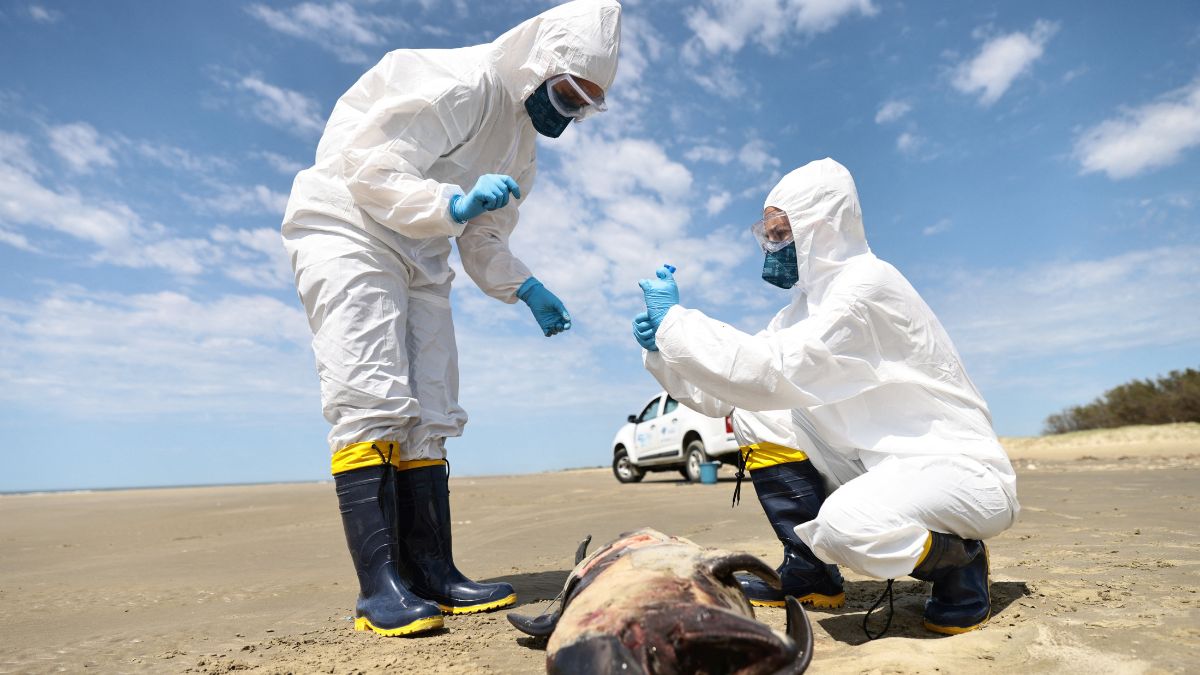
One influenza virus is causing great concern right now and is teetering on the edge of being a serious problem in 2025. This is influenza A subtype H5N1, sometimes referred to as “bird flu”. This virus is widely spread in both wild and domestic birds, such as poultry. Recently, it has also been infecting dairy cattle
in several US states and is found in
horses in Mongolia.
When influenza cases start increasing in animals such as birds, there is always a worry that it could jump to humans. Indeed, bird flu can infect humans with
61 cases in the US this year already, mostly resulting from farm workers coming into contact with infected cattle and people
drinking raw milk.
Compared with only two cases in the Americas in the previous two years, this is quite a large increase. Coupling this with a
30 per cent mortality rate from human infections, bird flu is quickly jumping up the list of public health officials’ priorities.
Luckily, H5N1 bird flu doesn’t seem to transmit from person to person, which greatly reduces its likelihood of causing a pandemic in humans. Influenza viruses have to attach to molecular structures called sialic receptors on the outside of cells in order to get inside and start replicating.
Flu viruses that are highly adapted to humans recognise these sialic receptors very well, making it easy for them to get inside our cells, which contributes to their spread between humans. Bird flu, on the other hand, is highly adapted to bird sialic receptors and has some mismatches when “binding” (attaching) to human ones. So, in its current form, H5N1 can’t easily spread in humans.
However, a recent study showed that a single mutation in the flu genome could make H5N1 adept at spreading
from human to human, which could jump-start a pandemic.
If this strain of bird flu makes that switch and can start transmitting between humans, governments must act quickly to control the spread. Centres for disease control around the world have drawn up
pandemic preparedness plans for bird flu and other diseases that are on the horizon.
For example, the UK has bought 5 million doses of the H5 vaccine that can
protect against bird flu, in preparation for that risk in 2025.
Even without the potential ability to spread between humans, bird flu is likely to affect animal health even more in 2025. This not only has large animal welfare implications but also the potential to disrupt the food supply and have economic effects as well.
Everything is connected
This work all falls under the umbrella of
“one health”: looking at human, animal and environmental health as interconnected entities, all with equal importance and effect on each other.
By understanding and preventing disease in our environment and the animals around us, we can better prepare and combat those diseases entering humans. Similarly, by surveying and disrupting infectious diseases in humans, we can protect our animals and the environment’s health too.
However, we must not forget about the continuing “slow pandemics” in humans, such as malaria, HIV, tuberculosis and other pathogens. Tackling them is paramount alongside scanning the horizon for any new diseases that might yet come.
Conor Meehan, Associate Professor of Microbial Bioinformatics,
Nottingham Trent University
This article is republished from
The Conversation under a Creative Commons license. Read the
original article.
Leave a Reply