
Trump’s Research Funding Cuts Puts Medical Progress At Risk
“I’m going to walk my daughter down the aisle on her wedding day.”
Eric told me this without hesitation, even though he had just been diagnosed with colon cancer that had spread to his liver at age 35. As his oncologist, I looked at him with empathy, even though I was not confident he would live to see that day. At the time, his disease was considered incurable.
However, a new study had just been published suggesting that patients like Eric might be cured through aggressive surgery and chemotherapy. I presented his case at my hospital’s cancer conference. Most of my colleagues dismissed the idea, but one surgeon agreed to try. Together, we offered Eric a path forward.
Twenty years later, Eric remains cancer-free. He has two grown daughters and a son. No aisle to walk down yet, but he’s still here and ready.
Eric’s situation is no longer an exception. Meticulous research over the years has proven what was once thought impossible: We can cure approximately 25% of patients with stage IV colon cancer that has metastasized to the liver. Chemotherapy has improved significantly, thanks to clinical trials. We even harness the immune system to treat certain kinds of colon cancer.
None of this happened by chance.
Courtesy of Eric Jablonski
Cancer treatment advances have been powered by federally funded research. Approximately 57% of global cancer research funding between 2016 and 2020 was provided by the U.S. government. Research has turned anecdotes like Eric’s into everyday occurrences, transformed death sentences into survivorship stories, and given patients access to tomorrow’s care today.
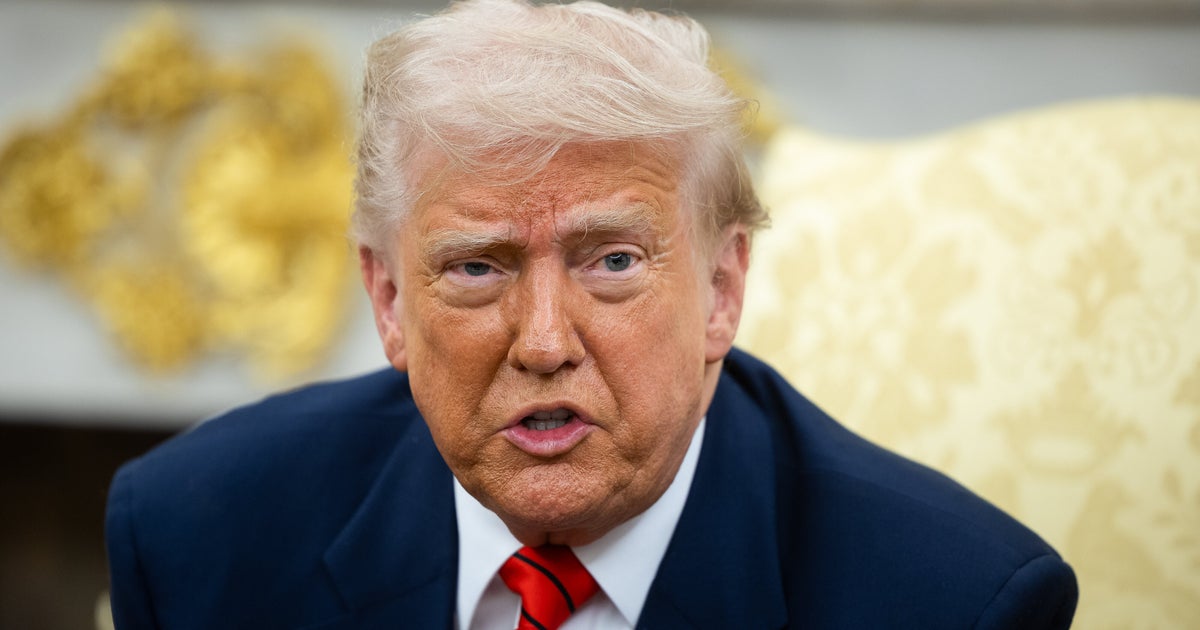
Recent Trump administration cuts to university funding don’t just threaten the future of cancer care. They erode hope for every family facing a devastating diagnosis. It’s an auction of America’s future, with each university’s lifeline going once, going twice, gone.
$400 million slashed from Columbia University. $790 million from Northwestern. $1 billion from Cornell. $2.2 billion from Harvard. Each successive cut grows larger, as President Donald Trump, always trying to go big, aims for the world record for destruction of medical progress.
“The consequences of withdrawing support for medical research will not be felt immediately. They will come quietly — missed diagnoses, treatments that never arrive, lives cut short.”
I could rattle off statistics all day long showing how federal investments in medical research have helped your family members live longer and better. Advances in screening and early detection mean we’re catching cancer earlier or preventing it altogether. As a result, fewer people are developing advanced cancers, and fewer are dying.
The cancer death rate has fallen by one-third between 1991 and 2020. Childhood leukemia survival rates have soared from about 50% in the 1970s to over 90% today. We also know how to reduce risk with proven strategies, like wearing sunscreen to guard against skin cancer or quitting smoking to dramatically lower the chance of lung cancer.
The research system that gave patients like Eric a future is now being dismantled, just as my family and I need it most.

Courtesy of Jennifer Obel
My daughter and I share a genetic condition called hypermobile Ehlers-Danlos syndrome (EDS), where the connective tissue that holds our bodies together stretches like an overused rubber band. It affects nearly every part of us: our joints shift painfully; our digestive tracts slow; a warm summer day overheats us. A recent study suggests that 1 in 500 people may be living with this condition, far more than once believed.
Currently, there is no genetic marker for hypermobile EDS. No diagnostic blood test. No proven medication. No consensus on diagnosis or how to manage patients like us.
In the absence of answers, I became my own research project. Without research to guide me, I turned to basic science, reading animal studies, piecing together theories, and treating my own body as a case study.
I have tried anecdotally promising but untested treatments: stem cell injections to tighten the loose ligaments in my spine, high-dose vitamin C injections adapted from burn care, and even bodybuilder regimens of testosterone and peptides in an attempt to tighten my joints.
None of this is ideal. None of this is proven. None of this is entirely safe. But when there is no roadmap, you try to navigate on your own.

Courtesy of Jennifer Obel
As a doctor-turned-patient, I am learning to live with the way my condition slows me down and the improvisations my body demands.
Research on EDS was just gaining momentum when the current administration slashed the NIH staff and budget, and gutted billions in medical research grants headed for universities across the country. These immense cuts not only threaten progress on rare conditions like EDS, but also future breakthroughs in treating cancer, heart disease, dementia and countless other conditions.
Unlike with the president’s massive tariffs, there’s no bond market to sound the alarm on a risky or unwise policy decision. The consequences of withdrawing support for medical research will not be felt immediately. They will come quietly — missed diagnoses, treatments that never arrive, lives cut short. And once those years are lost, they’re gone for good.
As a parent, I can accept whatever happens to me. But I will not accept that my daughter has to face a future without progress or answers. No parent should. She deserves better.
It’s not just my daughter’s future on the line. It’s the future of every family counting on science to save the people they love.

Courtesy of Jennifer Obel
Dr. Jennifer Obel is a retired oncologist and a former spokesperson for the American Society of Clinical Oncology, with a research focus on quality of life in patients with metastatic cancer. She led an oncology quality improvement team as part of her organization’s advance care planning initiative. Dr. Obel also served as principal investigator for several palliative care oncology studies, supported by both federal agencies and private foundations. In retirement, she remains committed to advancing her understanding of Ehlers-Danlos syndrome and focuses on maintaining her well-being through exercise and self-care.
Do you have a compelling personal story you’d like to see published on HuffPost? Find out what we’re looking for here and send us a pitch at [email protected].
Leave a Reply