
The Worst Types Of Socks For Your Foot Health
Certain types of shoes are known to be bad for your feet, such as high heels and flip-flops. But when it comes to foot health, there’s something else that often gets overlooked: the type of socks you wear.
Socks can “provide protection for our feet… and help with moisture control, temperature control, comfort” and support, said Dr. Chandler Hubbard, assistant professor at Western University of Health Sciences’ College of Podiatric Medicine.
We asked podiatrists and other foot doctors what to look for — and what to avoid — when seeking out socks that are comfortable and help maintain healthy feet.
Avoid dark or black socks.
When you’re wearing dark or black socks, the dye can rub off on your skin and nails, Hubbard said.
“[This] can cause unnecessary concern because… it can mimic the appearance of a bruise or a skin lesion,” she explained. “It can also cause irritation and potentially a contact dermatitis or allergic reaction.”
If you’re going to buy dark socks, Hubbard recommends washing them before you wear them to lessen the chance of dye staining the skin and nails.
Dr. Ebonie Vincent-Sleet, a board-certified podiatrist and foot and ankle surgeon at OC Podiatry, noted that black socks are often less breathable. The material can also get stuck underneath your toenails, which can lead to fungus.
For day-to-day socks (not compression socks), she suggests doing a test with your hand before buying to see how flexible the material is.
“You want to make sure that the material gives… it’s breathable [and] it’s not super thick,” she said. Otherwise, if your feet already tend to sweat, “all you’re doing is insulating your feet even more.”
Avoid socks that trap moisture.
The right fabrics are important, because they “can wick away moisture and prevent issues such as athlete’s foot and nail fungus,” said Dr. Priya Parthasarathy, a board-certified podiatrist and partner at U.S. Foot & Ankle Specialists of the Mid-Atlantic and spokesperson for the American Podiatric Medical Association.
The three main types of fabric used for socks are cotton, wool and synthetic, according to Hubbard.
“Cotton is not traditionally very moisture-wicking, [and] it just makes the moisture sit on your skin,” she explained. “Wool is a little bit better, but it’s usually thicker, so people don’t like to wear them during the summertime when it’s really hot.”
She said that most people like to wear synthetic socks, which are a blend of different materials and are usually good at wicking away moisture. But it can depend on the person. For example, if you don’t sweat a lot, you may prefer the feel of cotton or wool socks.
amriphoto via Getty Images
Avoid socks that don’t fit right.
If a sock is too loose, “it can slip down into a shoe and cause friction or lead to a blister or callus,” Hubbard pointed out. “If it’s too tight, it can actually cause that painful crease and restrict blood flow.”
If you are going to wear a sock that’s tighter, she suggests a compression sock or stocking that goes up to your knee and can help improve blood flow.
So how can you tell if a sock fits correctly?
“The socks should fit well especially around the arch, [and] the heel area of the sock should align with your heel without stretching out,” Parthasarathy said. “Your feet should not move around in the socks, [and] your feet should not feel restricted in them.”
There are even left and right sock options that model the contour of each foot and can be more comfortable, particularly for athletes, Vincent-Sleet noted.
Never rewear a pair of worn socks.
“There’s a lot of things that accumulate on your feet… sweat, oils and everything [else that] exude out of our skin into the sock itself, coupled with other extrinsic [things like] dirt,” said Dr. Amiethab Aiyer, an orthopedic surgeon who specializes in treating patients with foot and ankle conditions at Johns Hopkins Medicine.
Wearing dirty socks can lead to foot health issues like skin irritation and fungal infections. Even if your socks don’t look dirty or feel sweaty, you should wear a fresh pair every day, Aiyer advised. Depending on the activities you do, it may be worth changing your socks during the day if they become particularly dirty or sweaty.
“Fungus is everywhere in the environment, and when we sweat, that’s where fungus really likes to grow and thrive,” Hubbard explained.
For anyone who has a history of athlete’s foot or fungal nails, she recommends spraying out your shoes with an over-the-counter antifungal spray daily, or at least once a week. (In fact, she said it’s not a bad idea for everyone to do this.)
Avoid wearing sneakers with no socks.
Wearing sneakers without socks may feel stylish or comfortable for some, but Vincent-Sleet doesn’t recommend it.
“You don’t have that initial barrier of protection [without] a sock,” Vincent-Sleet said. You could develop athlete’s foot, fungal nails and calluses.
For people who want the no-sock look, she suggests trying footie socks or ankle socks.
“There’s so many different sock choices for your footwear out there,” she said. “Pick the one that’s most aesthetically pleasing to you, but definitely wear a sock.”
Toss out socks that are stretched out or have holes in them.
Holes in your socks “usually occur at the places that you’re stretching out the most, because that’s where your weight is being distributed,” Aiyer said.
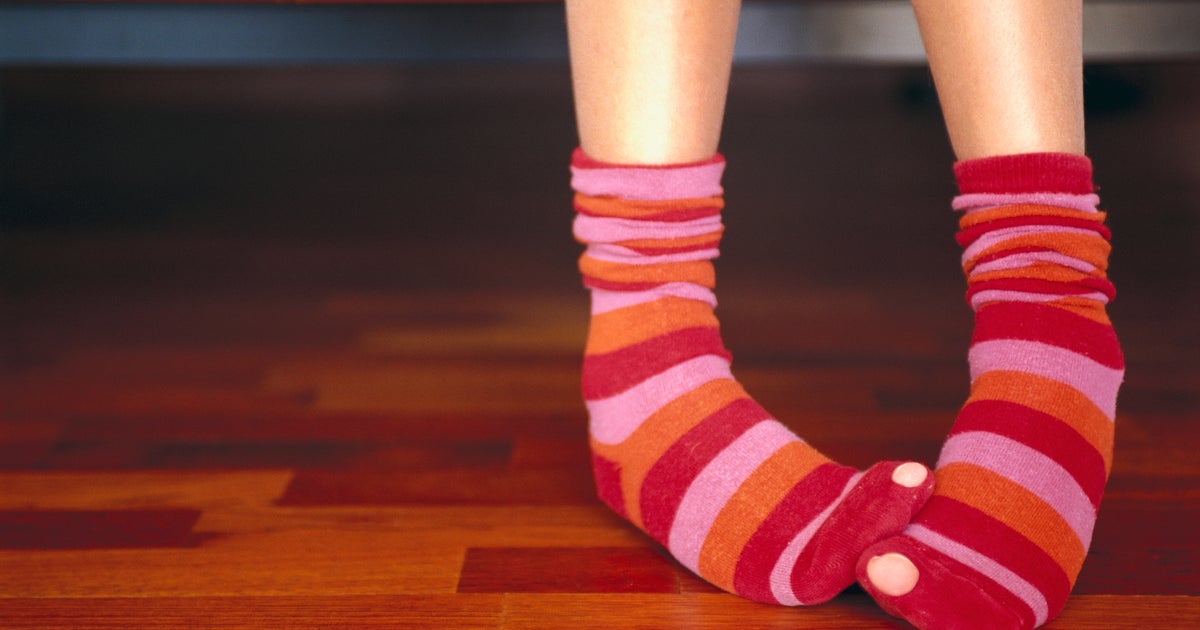
Wearing socks with holes can cause blisters and expose your feet to dirt and moisture.
Socks should be replaced every three to six months, or when they have holes in them or no longer retain their shape, Parthasarathy advised.
Make sure you’re wearing the right sock for the job.
“The big thing is thinking about what works for your foot versus someone else’s… [and] what do you need for your regular day-to-day activities,” Aiyer said.
For example, if you’re a runner, you want to look for fabric blends that are moisture-wicking and antimicrobial, like polyester, nylon and spandex, Parthasarathy explained. For people with diabetes, diabetic socks are looser and don’t “constrict in any areas, which can cause ulcers or wounds.” If you have swelling in your legs or varicose veins, compression socks are helpful.
“Not everyone’s using the same shoe model, and it [should be] the same with socks,” Aiyer said.
There are thousands of sock options, and it’s important to do your research before selecting what’s best for you. The comfort and health of your feet depend on it.
Leave a Reply