

The Taller The Hood, The Deadlier The Vehicle For Pedestrians, Study Finds
America’s roads may be witnessing improved safety for drivers, but there’s a troubling trend of heightened peril for pedestrians. A recent study not only reaffirms but underscores a strong correlation between the height of a vehicle’s hood and the likelihood of a pedestrian struck by that vehicle suffering fatal injuries.
window.ramp.que.push(function () {
window.ramp.addTag(“pwMobiMedRectAtf”);
})
While previous research has predominantly centered on the overall dimensions of vehicles as a determinant of pedestrian safety, a recent study featured in the journal Economics of Transportation narrows its focus to the height of a vehicle’s hood to evaluate its influence on safety results.
This new study, carried out by Justin Tyndall, who serves as an assistant professor of economics at the University of Hawai’i, made use of data provided by Transport Canada, an agency that compiles measurements of different vehicles. The researcher subsequently analyzed this vehicle measurement data in conjunction with crash-related information obtained from the U.S. National Highway Traffic Safety Administration (NHTSA).
advertisement scroll to continue
window.ramp.que.push(function () {
window.ramp.addTag(‘pwDeskMedRectAtf’);
})
window.ramp.que.push(function () {
window.ramp.addTag(“pwMobiMedRectBtf1”);
})
Read: Pedestrian Fatalities Hit 40-Year High, Even As Motorists Become Safer
The height of a vehicle’s hood is important data to consider because weight, which had been used as a proxy for size in other studies, doesn’t do a good job of explaining why certain vehicles are dangerous to pedestrians.
While weight is a critical factor in assessing a vehicle’s risk to its occupants and occupants of other automobiles, it becomes less significant when considering pedestrian safety due to the substantial weight difference. Tyndall’s analysis concludes that the height of a vehicle’s hood is a more meaningful indicator of its potential danger to pedestrians compared to weight alone.
window._taboola = window._taboola || [];
_taboola.push({
mode: ‘thumbnails-a-mid’,
container: ‘taboola-mid-article’,
placement: ‘Mid Article’,
target_type: ‘mix’
});
window._taboola = window._taboola || [];
_taboola.push({
mode: ‘thumbnails-oc-2×1’,
container: ‘taboola-mid-article-thumbnails-organic’,
placement: ‘Mid Article Thumbnails Organic’,
target_type: ‘mix’
});
“Front-end height was found to be the strongest predictor of pedestrian death of the size measures studied,” wrote Tyndall. “The finding suggests that regulatory changes that discourage high front-end designs could improve pedestrian outcomes.”
In fact, Tyndall’s research reveals that for every 3.9 inches (10 cm) increase in the height of the vehicle’s hood, there is a 22 percent higher likelihood that a pedestrian struck by the vehicle will suffer fatal injuries. This implies that the design of the front-end of a vehicle may have a more significant impact on pedestrian safety than its overall weight.
Women and children are at higher risk
However, the impact of front-end vehicle height is not evenly distributed across the entire population. Tyndall’s research reveals that this effect is more pronounced for women and children compared to men, primarily due to the height differences between these groups. For example, a 3.9-inch increase in hood height raises the risk of fatal injury by 19 percent for a man, 31 percent for a woman, and a staggering 81 percent for a child.
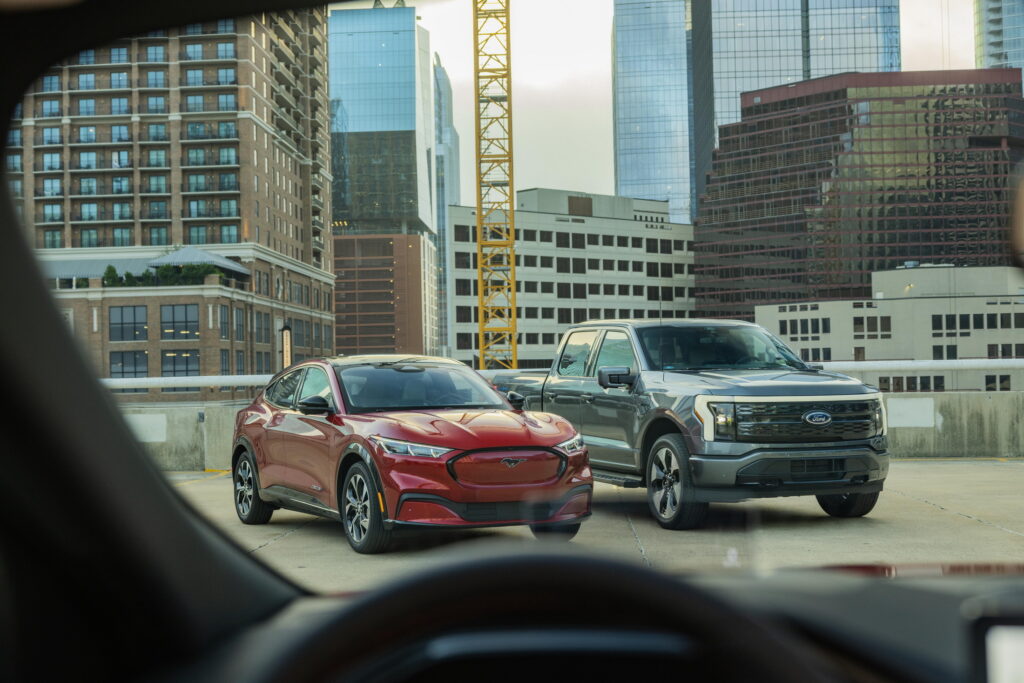
The data suggests that implementing a hood height cap could yield significant societal benefits. Tyndall recommends a cap of 49 inches (1.25 meters). While this change would have minimal impact on crossovers, it would necessitate a reevaluation of designs for pickups and full-size SUVs. The paper estimates that such a measure could potentially save 509 lives annually.
“Across the 2,126 pedestrians killed by high-front-ended vehicles (1.25 m), I estimate 509 lives would be saved annually by adopting a 1.25-m front-end limit,” wrote Tyndall. “The lives saved equal 7% of annual pedestrian deaths. Reducing the limit to 1.2 m would spare an estimated 757 pedestrian lives per year, and further reducing the cap to 1.1 m would spare an estimated 1,350 pedestrian lives per year”.
Leave a Reply