
Redefining Waste: How The Circular Economy Can Help Tackle Plastic Pollution
Last Updated:
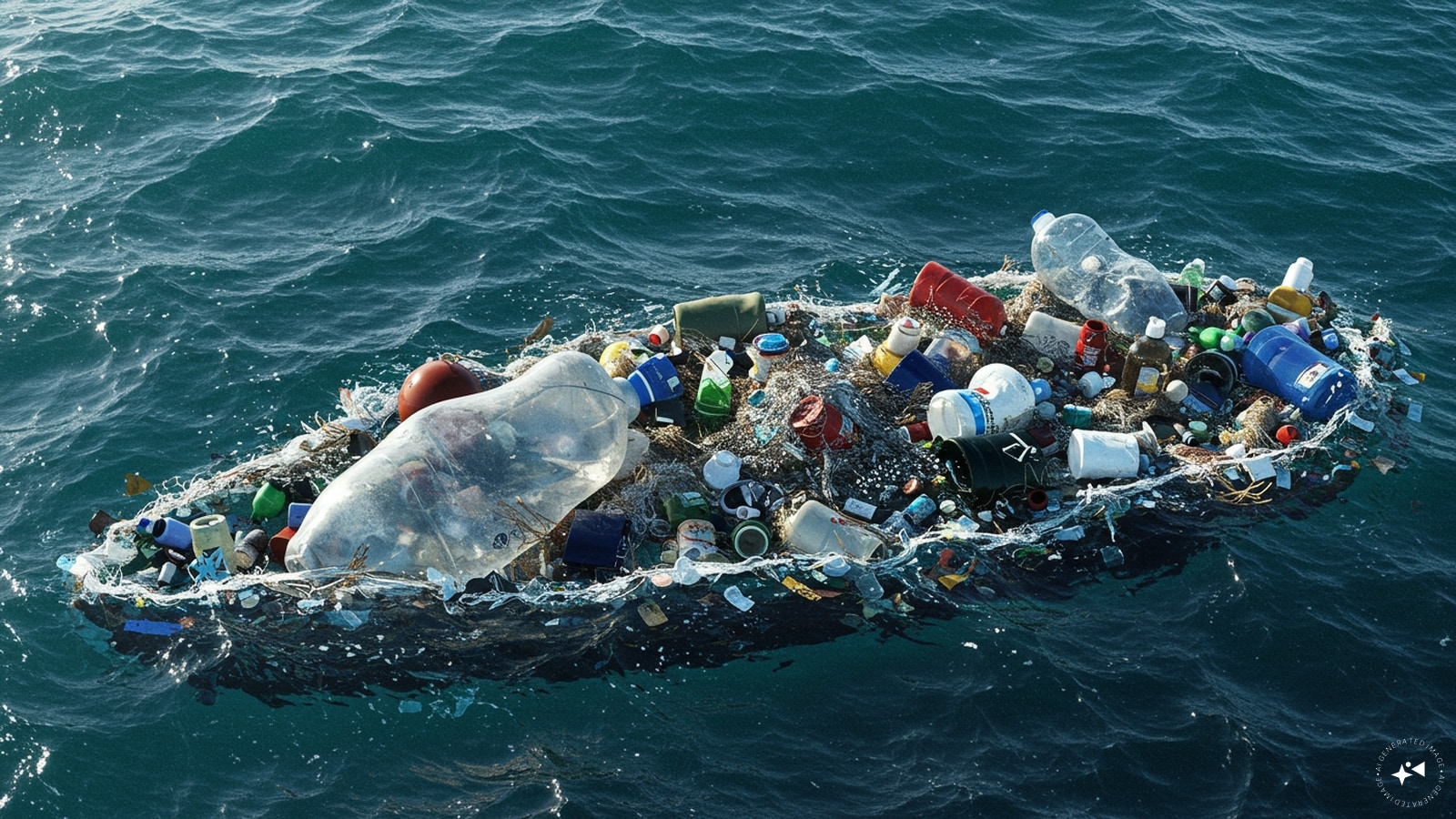
Only a small percentage of the global plastic waste is recycled. The remaining percentage ends up in landfills, water bodies, and oceans.
The circular economy seeks to cut plastic pollution by promoting recycling and reuse. (AI Generated Image)
As we mark World Environment Day on June 5, the circular economy often comes up in conversations. The term ‘circular economy’ refers to a holistic, sustainable approach that considers every stage of a product’s life cycle – from raw material extraction to manufacturing, distribution, consumption, and ultimately, recycling or disposal. When it comes to plastics, however, the circular economy remains more ideal than reality. Currently, only about 10% of global plastic waste is recycled, with the vast majority ending up in landfills, water bodies, and oceans, causing severe harm to ecosystems, wildlife, and human health.
While plastics have revolutionised industries, they have also become one of the most pervasive pollutants on the planet. In light of the escalating climate crisis, it becomes crucial to integrate the principles of the circular economy into plastic production and disposal.
Applying Circular Economy to Plastic Waste
The circular economy can significantly cut the demand for virgin plastic, reducing fossil fuel use and lowering greenhouse gas emissions. By promoting the reuse and recycling of plastics, items like bottles and bags can be transformed into apparel, footwear, or even durable materials for road construction. This shift also holds the potential to generate millions of jobs in the design and production of recycled and upcycled products.
Vivek Mehra, Chief Sustainability Officer, CTO and Co-founder, Onlygood.ai, says, “A key pre-requisite to building a circular economy is for all stakeholders to begin to collaborate. This includes greater awareness and reduction of consumption by the average consumer, NGO collaboration with local and central governments to set up waste collection and recycling centres, and industries to innovate and invest in new technologies that can clean, recycle and transform plastic waste. Industries and government can do well to incentivise the consumer to return end-of-life plastic products to recycling vendors or centres.”
Benefits of the Circular Economy in Tackling Plastic Pollution
Mehra notes, “A circular economy can only be built if society stops treating plastic as a disposable material and instead begins to reimagine plastic as a limited resource. Plastic has to be consumed consciously and disposed of consciously. Governments have to play a role in incentivising this behaviour. Plastic producers and recycling industries have to take on the responsibility to make it easier and financially lucrative to recycle plastic. With foresight, vision and stakeholder collaboration, a circular economy for plastic can provide a greener pathway for growth.”
The Challenges
Transitioning to a circular economy for plastics presents several challenges. Many regions lack the infrastructure needed for effective waste collection and recycling. Product designs often ignore recyclability, complicating end-of-life processing. Shifting consumer behaviour requires sustained awareness efforts, incentives, and education. Additionally, fragmented and evolving regulations can hinder the consistent implementation of circular practices.
Mehra notes, “One promising approach to addressing the growing problem of plastic pollution is the circular economy. We can promote sustainable patterns of production and consumption by redefining waste as a resource and promoting cooperation between governments, businesses, non-governmental organisations, and consumers. A circular plastics economy not only benefits the environment by reducing pollution and greenhouse gases but also stimulates economic growth and job creation.”
Despite these hurdles, the circular economy offers a powerful solution to the global plastic pollution crisis. With focused commitment and creativity, it holds the promise of a cleaner, more resilient future.
- Location :
Delhi, India, India
- First Published:
Leave a Reply