
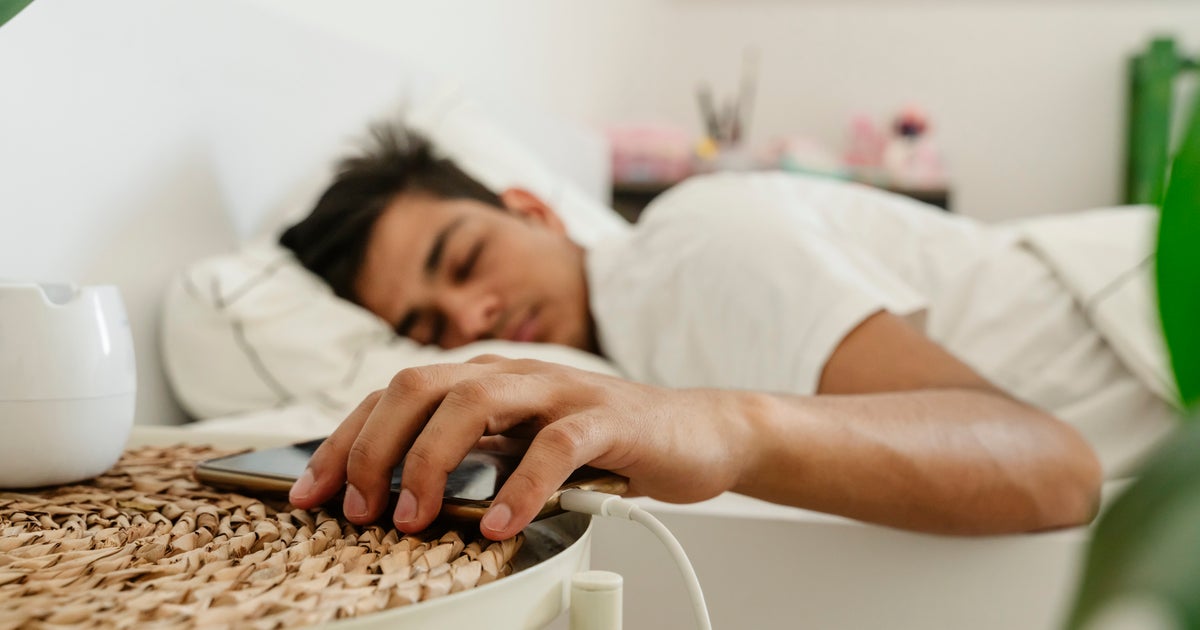
It’s Important To Know Your ‘Sleep Type.’ Here’s Why.
You’re probably well aware of your personality type, like whether you’re an introvert or extrovert. You might even know your love language. But have you ever considered your sleep type?
Researchers from Pennsylvania State University recently released a study that helps people determine their sleep type and what it means for their overall health. The data, which was published in the journal Psychosomatic Medicine, was made up of 3,683 middle-aged adults in the United States. Participants reported their chronic health conditions and sleep metrics — sleep duration, satisfaction, regularity, alertness and efficiency — twice during the study’s 10-year period.
Researchers then categorized participants into one of four different sleep types:
- Good sleepers: Those who had ideal sleep habits
- Weekend catch-up sleepers: People who had irregular, reduced sleep on weekdays and slept longer on the weekends or their days off
- Insomnia sleepers: Those who didn’t sleep for very long and had daytime sleepiness
- Nappers: Individuals who had good sleep but took frequent naps during the day
“I think that the four categories that they explained was a good way to kind of sum up the broad spectrum of what we see within clinical sleep disorders … and [the] kind of patients that come to our clinic,” said Dr. Kenneth Lee, the medical director of the University of Chicago’s Medicine Sleep Disorders Center. Lee was not affiliated with the study.
“Now, obviously, we don’t see the good sleepers. If you’re sleeping well, you’re not going to see a sleep doctor. But oftentimes, we see the other categories,” he said.
More than half of the study participants fell into the “suboptimal” napper or insomnia-sleeper categories. Throughout the 10-year study period, participants’ sleep type largely stayed the same.
“These results may suggest that it is very difficult to change our sleep habits because sleep health is embedded into our overall lifestyle. It may also suggest that people still don’t know about the importance of their sleep and about sleep health behaviors,” study author Soomi Lee said in a press release.
Westend61 via Getty Images
Researchers found that insomnia sleepers were more likely to develop health conditions like diabetes, cardiovascular disease and depression. Nappers were also more likely to develop these conditions, but less likely than insomnia sleepers.
This and other studies show “there’s a lot of health benefits in terms of getting optimal sleep,” Lee said. In addition to increased risk of heart disease or stroke, irregular sleep patterns can worsen the risk of developing diabetes, dementia or mood disorders.
Sleep “gives the brain a chance to rejuvenate,” Lee said. “And so it helps wash away … a lot of kind of the things that your brain needs to clear out.”
While most everyone knows insomnia is a problem, excessive napping can also mask sleep issues. “My concern with napping is that it might point to an underlying sleep issue — like, for instance, not getting enough sleep or getting poor quality sleep,” said Dr. Mira Tadros, an assistant professor of medicine at the Icahn School of Medicine at Mount Sinai in New York. (Tadros was not affiliated with the study.)
“It’s important if someone is noticing that they’re needing to nap when they did not need to nap before, or just finding the afternoon sleepiness a little bit more severe, to really evaluate their sleep and sleep quality,” Tadros said.
People who catch up on sleep on the weekends or their days off should think about their rest habits, too.
“That’s not optimal, either. It would be ideal to have the same amount of adequate sleep [each night]. … I think a lot of us are guilty of this, where we’re staying up late to do work, or family obligations or those kind of things, and we’re just stretched so thin, and then we just catch up [on sleep],” Lee said.
Having a regular sleep schedule is ideal. Whether it’s Saturday night or Wednesday night you should be going to bed around the same time and waking up around the same time, too.
What you can do to get better sleep
Not sleeping well is a frustrating thing — is there anything worse than tossing and turning at 2:30 a.m.? First, you should give yourself credit for wanting to get better sleep. “As with any issue, recognizing a problem is the first step to solving it,” Lee said.
Adults should aim for seven to nine hours of sleep each night.
According to Tadros, it’s important to have a wind-down routine before bed that puts you in a relaxing state. To do this, she recommends meditating, reading or taking a warm bath or shower, avoiding screens before bed and cutting back on caffeine and alcohol. You also don’t want to work or study right up until bedtime, Lee said. Sleeping in a cool, dark environment can help, too.
“Try to avoid anything in bed that is not sleeping or intimacy,” Lee said. “That would include things such as doing work, being on your phone, watching TV, reading, because the more time you spend in bed not sleeping, the more your body gets used to that … and that’s one of the associations that we want to really try to remove.”
The Penn State study largely focused on the chronic health issues that can come from insomnia — a condition that requires medical attention, not just the better-sleep interventions mentioned above.
“[When] you can’t sleep during the nighttime or you’re up in the middle of the night, it’s very daunting and you can feel like you’re on an island,” Lee said. But many people struggle with insomnia. In fact, it’s one of the most common sleep complaints doctors see.
If the tips above don’t help you get better zzz’s or if you still wake up tired after enough hours of sleep, there could be something else at play, he added.
“You’re not alone — sleep doctors can help you and your primary care physician can help as well,” Lee said.
Leave a Reply