
I Almost Died From A Rare Disease
What’s your name? Taylor Coffman.
Do you know where you are? The hospital.
What is the date? February 17, 2022.
Who’s the president? Biden.
What’s the capital of Canada? Uh-oh. Ottawa? Do Americans typically know that?
I tried to respond to my new internist, but the answers didn’t flow from me. Each one caused a stutter the size of Mariana Trench — and it terrified me.
Plus, I was twitching so badly, my arms were practically useless.
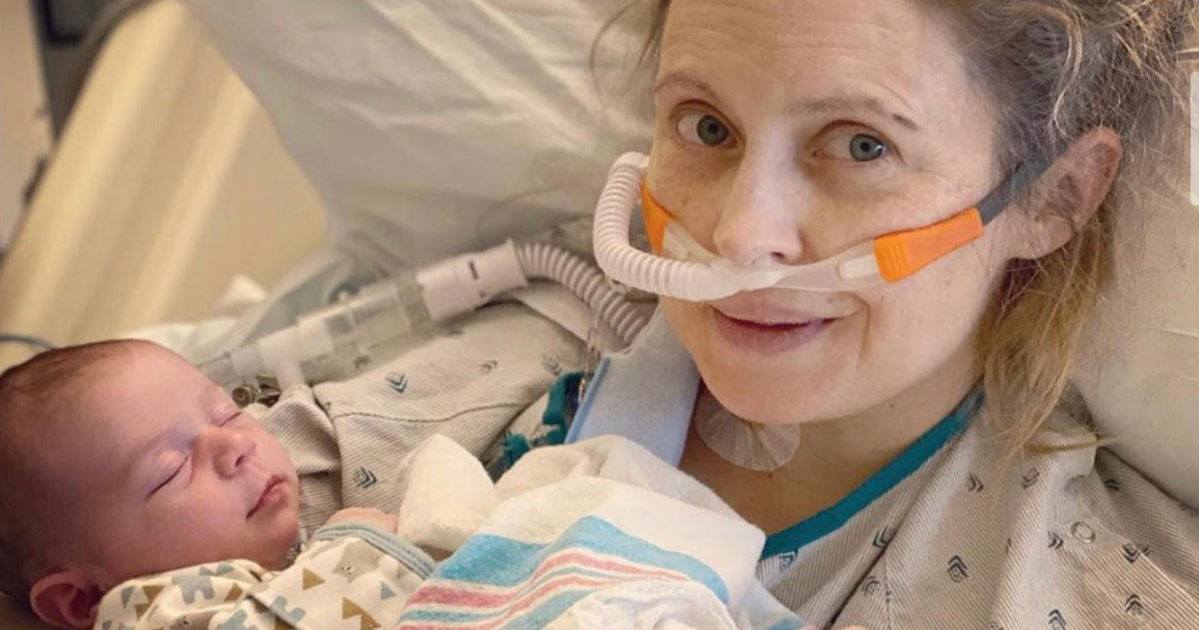
I’d been in the hospital for a month. Zach, my husband, was at home in our apartment taking care of my newborn baby with my mother. It wasn’t easy for them: small apartment, new baby, one bathroom, my life hanging in the balance.
For the last few weeks, I’d been cycling in and out of the ICU. Zach had even gotten “the talk” — a doctor had called in the thick of the night to tell him that I might not make it home. Many thought I would likely not survive. They didn’t fully know what was wrong with me, except that everything was going wrong with me.
Four weeks earlier, I had my baby by C-section. Moments later, I was rushed into another surgery because my vitals started to plummet and I was bleeding out rapidly.
I didn’t even get to hold my baby. There was no skin-on-skin — only chaos, panic, and then I didn’t wake from my anesthesia. It was a living nightmare. I did wake up eventually, and four days after giving birth, I finally met my daughter before she went home — without me.
After having my baby, I endured three rounds of ICU intubation, multiple abdominal surgeries, a body full of blood clots, heart failure and kidney failure with a dash of severe sepsis and pneumonia and a long list of other scary conditions I’d never want to Google. I was a forever-changed, half-dead person.
Once I was removed from the ventilator for the final time — and I was able to speak again — a rotating cast of doctors visited me every day, and told me different things about my condition. It felt like some absurdist theater play. I had practically the same conversation over and over and over in a spin cycle of frustration and a maze of murky next steps.
My case was especially challenging because I had so many bodily systems failing and that required a slew of doctors. I had a fetal maternal medicine team, residents, an internist, a cardiologist, a hematologist, a nephrologist, an infectious disease specialist, a pulmonologist, a surgical team and maybe a few others I’ve forgotten.
“I’m a project manager at my day job, and you all have got to get organized working across fields,” I complained to one of my many physicians. “Everyone is telling me something different.”
In response to my speaking up, my doctors finally put a text chain together so they could all communicate in one place.
It’s possible that text chain saved my life — and it may never have been created if I hadn’t said something.
I realized, if I was going to live, I’d have to project-manage my recovery. I had power. I could assert myself. My doctors cared deeply about my survival, so I reasoned it was time to start asking them for what I needed instead of passively riding my tidal wave of medical torment. My skin was gray and my kidneys didn’t work, but I wasn’t weak — not where it counted the most. I had my mind and I had my voice back, so I needed to use it.
I was many tests away from an official diagnosis but my wise hematologist had a theory that I have a particularly nasty disease called atypical hemolytic uremic syndrome, or aHUS. It’s wildly rare and kills a lot of people who get it. The disease strikes women in particular because it often hides in the body until a trigger — like pregnancy — sets it off.
After a few stable days, I began to feel a progressively increasing shake and stutter in my body. I tried to project manage by sharing my new symptoms with my doctors. “This isn’t me,” I said. “Something else is really wrong.”
My newly assigned internist told me it might be a side effect of my medicine. Other doctors suggested I was stressed and recommended I take clonazepam to ease my anxiety.
Suddenly, a few hours later, everything in my perception began mysteriously repeating three times in a row, like being stuck in a horrific deja vu loop, and then I could no longer speak.
It turned out my body was poisoning my brain with toxins because my kidneys were failing. I desperately needed dialysis, but there were no machines available at this massive cutting-edge hospital… and my nightmare continued longer than it should have.
I was beyond angry and frustrated. Despite constantly keeping my many providers apprised of my symptoms, I was now at the point of toxic encephalopathy and experiencing aphasia and nervous system tremors with deja vu.
Why had I been dismissed when I spoke up about the warning signs I was experiencing?
The data doesn’t look fondly on the system. A 2009 study showed middle-aged women with the same heart disease symptoms as men were twice as likely to be diagnosed with a mental health issue. The Journal of American Heart Association found that women possibly experiencing a heart attack wait 29% longer in ERs than men.
Recently, the CDC reported 1 in 5 women experience mistreatment during their pregnancies, and the stats are markedly worse for Black women, resulting in higher rates of tragic maternal mortality.
I know that doctors often have it rough in a broken system. I sympathize with their challenges and fatigue. But it should be on the medical industry and educational institutions — not patients — to make strides to overcome these pressures.
I am also not saying we should always distrust our doctors. I believe in science and I believe in their training and expertise. But after everything I experienced, I now know there are ways patients can better support our providers, and I know that engaging with them and playing an active role in our care is not only vital — it can mean the difference between life and death.
Now, I approach health care differently.

Courtesy of Taylor Coffman
While doctors certainly have knowledge and training that I do not, I am an expert on myself. We work together and truly listen to each other to make the best decisions about how to treat my conditions. I urge them to communicate in a clear way that helps me understand exactly what is happening and I continue to voice my concerns until I am satisfied that they understand what I’m experiencing.
When I know something is wrong, but I’m not sure exactly what, I become a researcher. I organize a list of bullet points about what I am feeling in the notes app on my phone and bring it to my appointment.
I also do my homework. Though many doctors say they hate it when patients look for information on the internet — and Googling symptoms can lead to trouble — a new study shows it may not be as harmful as once thought, and there are many great digital resources to consult.
If I want a test or procedure that a doctor doesn’t agree I need, I ask them to annotate my request in the notes. Written records have weight. I also often ask medical professionals if it’s okay to record the appointment using my phone’s voice memo recorder.
When we see doctors, we’re often overwhelmed by all of the information we’re receiving and the big emotions we’re feeling and it’s amazing how much we can miss.
My current doctors are invested in my care and I like them all. But, at the end of the day, it’s a relationship based on their ability to keep me well. If I don’t see progress, I get a second opinion, and it’s okay if they know that. It’s not personal. These doctors often end up consulting each other.
Most people don’t want to be a squeaky wheel, but be a squeaky wheel. Research shows being an empowered patient can improve health outcomes. I respect boundaries and I’m kind, but I’m insistent. If I commit to a plan with the doctor, I don’t slack. It’s not always easy, but when I’m doing everything that’s asked of me, if a treatment doesn’t work, then it’s not on me.
Five grueling weeks after giving birth, I finally went home to my baby. It turned out that my hematologist was right — I do have aHUS.
Today, I’m doing quite well by chronic rare disease standards. There is no cure for aHUS, but it’s one of the very few rare diseases with an approved treatment. After nine months of dialysis, my kidney regained some function and left me with stage 3 kidney disease. I currently get infusions every eight weeks to keep my aHUS from causing more damage, but otherwise, I’m busy being a mom to my active toddler.
While the experience was a roller coaster, I did find my voice in that hospital bed. I learned the importance of advocating for my needs and, most crucially, to trust myself when something is wrong.
Read more about Taylor’s story on Rare Disease Girl Substack.
Taylor Coffman is a multi-hyphenate creative from the East Coast. As an actor, Coffman has recurred on HBO’s “Silicon Valley” directed by Mike Judge, CBS’s “Life in Pieces,” Rachel Dratch’s “Late Night Snack,” and has appeared in Ryan Murphy’s “FEUD.” Behind the scenes, she worked for many years at Jimmy Kimmel Live; one of the nation’s most listened-to NPR stations, KPCC; and in podcasting at LAist Studios. She lives in Santa Monica with her musician husband, Dustbowl Revival’s Zach Lupetin, her daughter and a very needy rescue dog named Sunny.
Do you have a compelling personal story you’d like to see published on HuffPost? Find out what we’re looking for here and send us a pitch at [email protected].
Leave a Reply