
)
How blood donations could help provide a lifeline to donors – Firstpost
A new study shows that rolling up your sleeve to give blood might do more than just help others — it could also improve the donor’s health in many ways, including reducing cancer risks and improving insulin sensitivity
read more
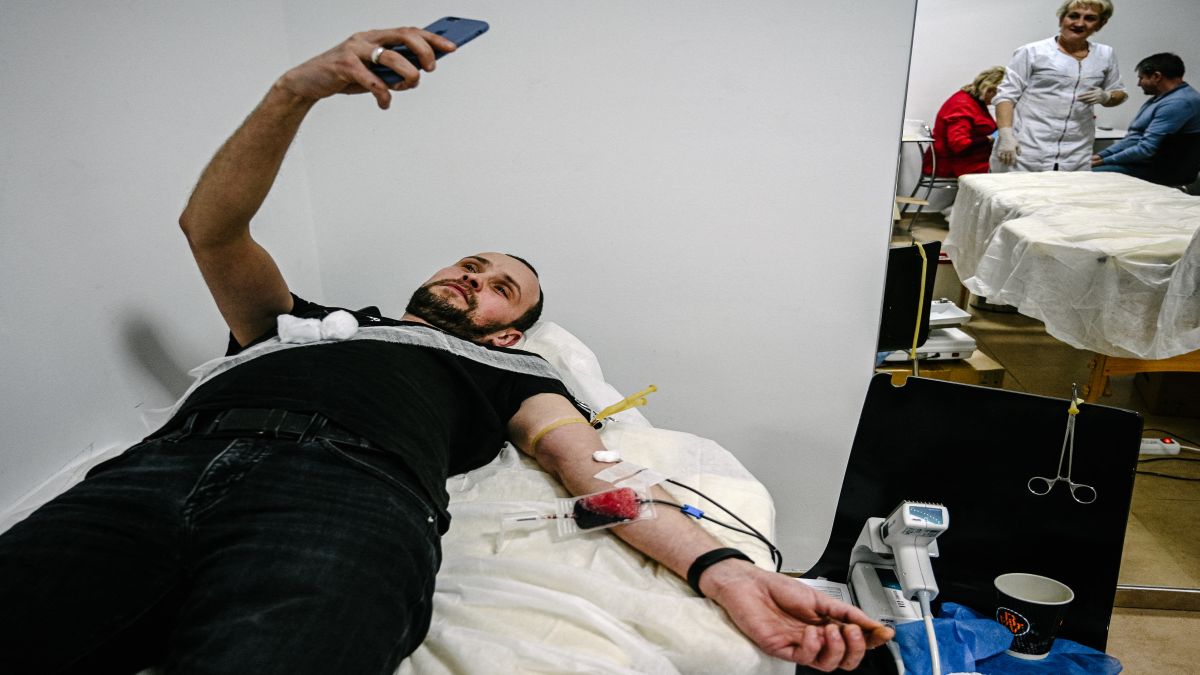
Blood donation is widely recognised as a life-saving act, replenishing hospital supplies and aiding patients. But could donating blood also benefit the donor?
Frequent blood donors may experience subtle genetic changes that could lower their risk of developing blood cancers, according to
new research from the Francis Crick Institute in London. Alongside this, a growing body of evidence highlights a range of health benefits associated with regular donation.
As we age, our blood-forming stem cells naturally accumulate mutations, a process known as clonal haematopoiesis. Some of these mutations increase the risk of diseases such as leukaemia. However, the new Francis Crick Institute study has identified an intriguing difference in frequent blood donors.
What does the study reveal?
The study compared two groups of healthy male donors in their 60s. One group had donated blood three times a year for 40 years, while the other had given blood only about five times in total. Both groups had a similar number of genetic mutations, but their nature differed. Nearly 50 per cent of frequent donors carried a particular class of mutation not typically linked to cancer, compared with 30 per cent of the infrequent donors.
It is thought that regular blood donation encourages the body to produce fresh blood cells, altering the genetic landscape of stem cells in a potentially beneficial way.
In laboratory experiments, these mutations behaved differently from those commonly associated with leukaemia, and when injected into mice, stem cells from frequent donors were more efficient at producing red blood cells. While these findings are promising, further research is needed to determine whether donating blood actively reduces cancer risk.
Each time a person donates blood, the body quickly begins the process of replacing lost blood cells, triggering the bone marrow to generate fresh ones. This natural renewal process may contribute to healthier, more resilient blood cells over time.
Some evidence even suggests that blood donation could
improve insulin sensitivity, potentially playing a role in reducing the risk of type 2 diabetes, though research is still underway.
For years, scientists have speculated about a possible link between blood donation and cardiovascular health. One of the key factors in heart disease is blood viscosity — how thick or thin the blood is. When blood is too thick, it flows less efficiently, increasing the risk of clotting, high blood pressure and stroke. Regular blood donation helps to reduce blood viscosity, making it easier for the heart to pump and lowering the risk of cardiovascular complications.
There is also growing evidence that blood donation may help regulate iron levels in the body, another factor linked to heart disease. While iron is essential for oxygen transport in the blood, excessive iron accumulation has been associated with oxidative stress and inflammation, both of which contribute to heart disease. By shedding iron through donation, donors may be reducing their risk of these iron-related complications.
Some studies have even suggested a potential link between blood donation and lower blood pressure, particularly in people with hypertension. Though not a substitute for medication or lifestyle changes, donating blood may be another way to assist overall cardiovascular health.
Donors may not realise it, but every time they give blood, they receive a mini health screening. Before donation, blood pressure, haemoglobin levels and pulse are checked, and in some cases, screenings for infectious diseases are performed. While not a replacement for regular check-ups, it can serve as an early warning system for potential health issues.
Correlation or causation?
Of course, an important question remains: do these health benefits arise because of blood donation itself, or are they simply a reflection of the “healthy donor effect”? Blood donors must meet strict eligibility criteria. People with chronic illnesses, certain infections or a history of cancer are usually not allowed to donate. This means that those who donate regularly may already be healthier than the general population.
Regardless of whether blood donation confers direct health benefits, its life-saving effect on others is undeniable. In the UK,
NHS Blood and Transplant has warned that blood stocks are critically low, urging more people to donate.
If future research confirms that donating blood has measurable advantages for donors as well, it could serve as an even greater incentive for participation. For now, the best reason to donate remains the simplest one: it saves lives.
Michelle Spear, Professor of Anatomy, University of Bristol
This article is republished from
The Conversation under a Creative Commons license. Read the
original article.
Leave a Reply