
Health Secretary Becerra Touts Extreme Heat Protections. Farmworkers Want More.
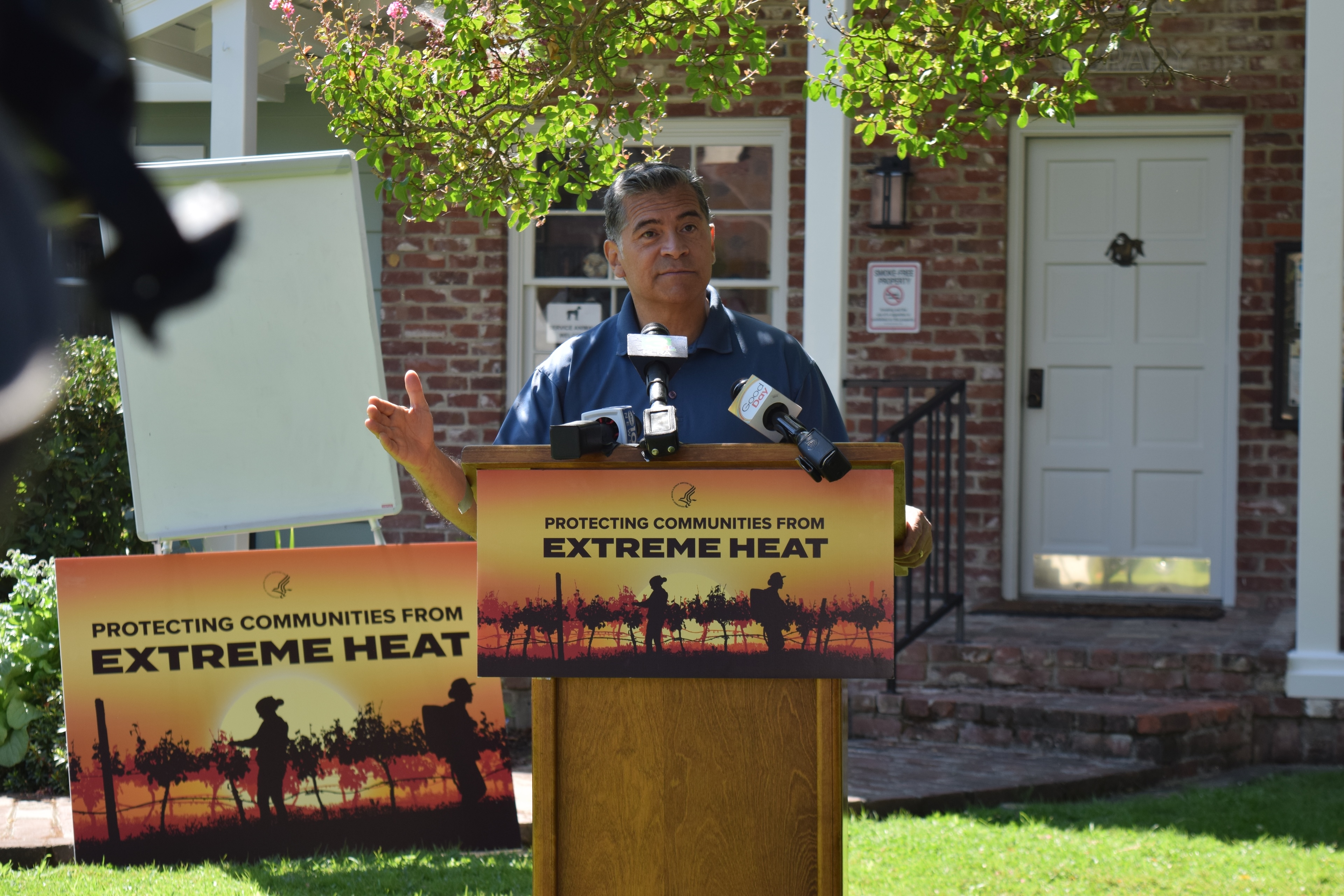
CLARKSBURG, Calif. — On a sunny August morning in this agricultural town, before temperatures soared to 103 degrees, U.S. Health and Human Services Secretary Xavier Becerra stood outside the small public library.
He came to talk about the Biden administration’s efforts to protect farmworkers from extreme heat and wildfire smoke, two emerging public health issues at the forefront of the climate crisis.
“There are still not enough protections for workers that are picking the food that we eat,” Becerra told a group of local reporters and government officials, who outnumbered the farmworkers in the audience.
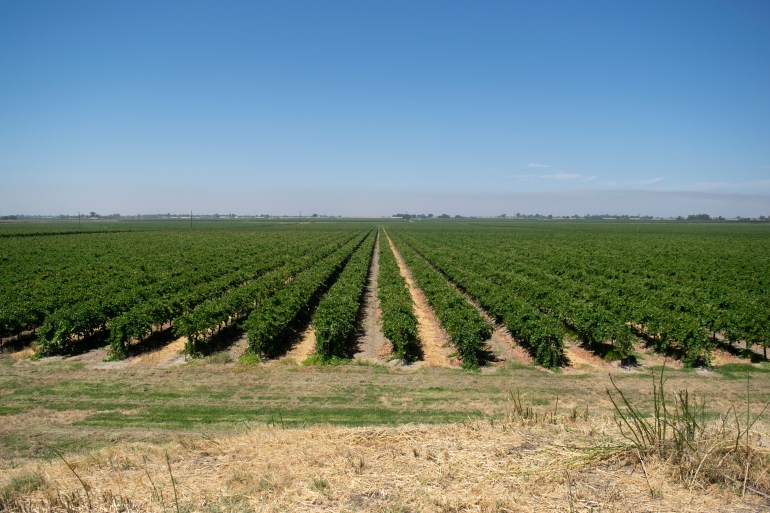
Becerra, whose father worked in the fields, had just come from visiting women picking grapes who protect themselves from the sun by dressing in sweaters, long pants, and kerchiefs that cover their noses and mouths. The summers are long and intense in Clarksburg, a town of about 300 people along the Sacramento River that supplies California’s wine industry with petite sirah, sauvignon blanc, and other grapes harvested by hundreds of farmhands.
“It’s going to be a hot day,” he added. “But they are still dressed as if it were winter.”
The nation’s top health officer, who is mulling a run for governor, has emerged as one of the Biden administration’s leading voices on climate change, focusing attention on low-income and other marginalized workers, who feel the impacts of extreme weather the most. In March, HHS released voluntary safety guidelines and educational materials that farms can use to protect their workers from smoke and heat.
Becerra’s appearance before reporters in front of the library was brief and scheduled to mark Farmworker Appreciation Day, not far from his home in Sacramento, where his wife, a doctor specializing in high-risk pregnancies, remains at work. He advertised the educational materials on the risks of heat illness and when temperatures might be too high to work. But he acknowledged that there is only so much he can do because workplace protections are overseen by the Department of Labor.
“Much of our jurisdiction doesn’t reach those workers directly,” Becerra acknowledged after meeting with grape pickers. “We owe everyone who is working to put food on our table the best effort to make sure that they are working under the safest conditions.”
His aides distributed a press release that listed a number of resources, including free workplace health investigations by the Centers for Disease Control and Prevention’s National Institute for Occupational Safety and Health; a training on the dangers of heat and smoke from the National Institute of Environmental Health Sciences Worker Training Program; and planned awards to 77 health care providers in high-need areas, totaling $50 million, from the Health Resources and Services Administration.
Climate change is increasing the frequency and intensity of extreme heat, which is already the No. 1 weather-related killer in the U.S., as well as fueling wildfires across the nation. There’s no official count of farmworker deaths from weather, but heat-related deaths have increased in recent years, jumping from 1,722 in 2022 to about 2,300 last year.
The U.S. Department of Labor in July released a proposed workplace heat standard that would require employers to give rest breaks, water, and shade or air conditioning to workers exposed to excessive heat, but a final rule is likely years away. It’s unclear if it would supersede state regulations.
Five states have heat safety protections for workers in outdoor or indoor settings. In California, for instance, employers must provide water, cool-down areas, and breaks to workers when temperatures hit 82 degrees indoors and 80 degrees outdoors. The other states are Colorado, Minnesota, Oregon, and Washington, and Maryland is expected to finalize a heat standard this year.
While Becerra said states can create their own workplace safety regulations, a federal heat safety standard would offer protections nationwide, forcing states like Florida and Texas — whose Republican governors have signed laws banning heat safety protections — to comply with minimum standards.
Becerra is hoping states will tap into the programs his health department is offering even though they are optional. Even in California, which has one of the country’s toughest heat protection standards, workers could benefit.
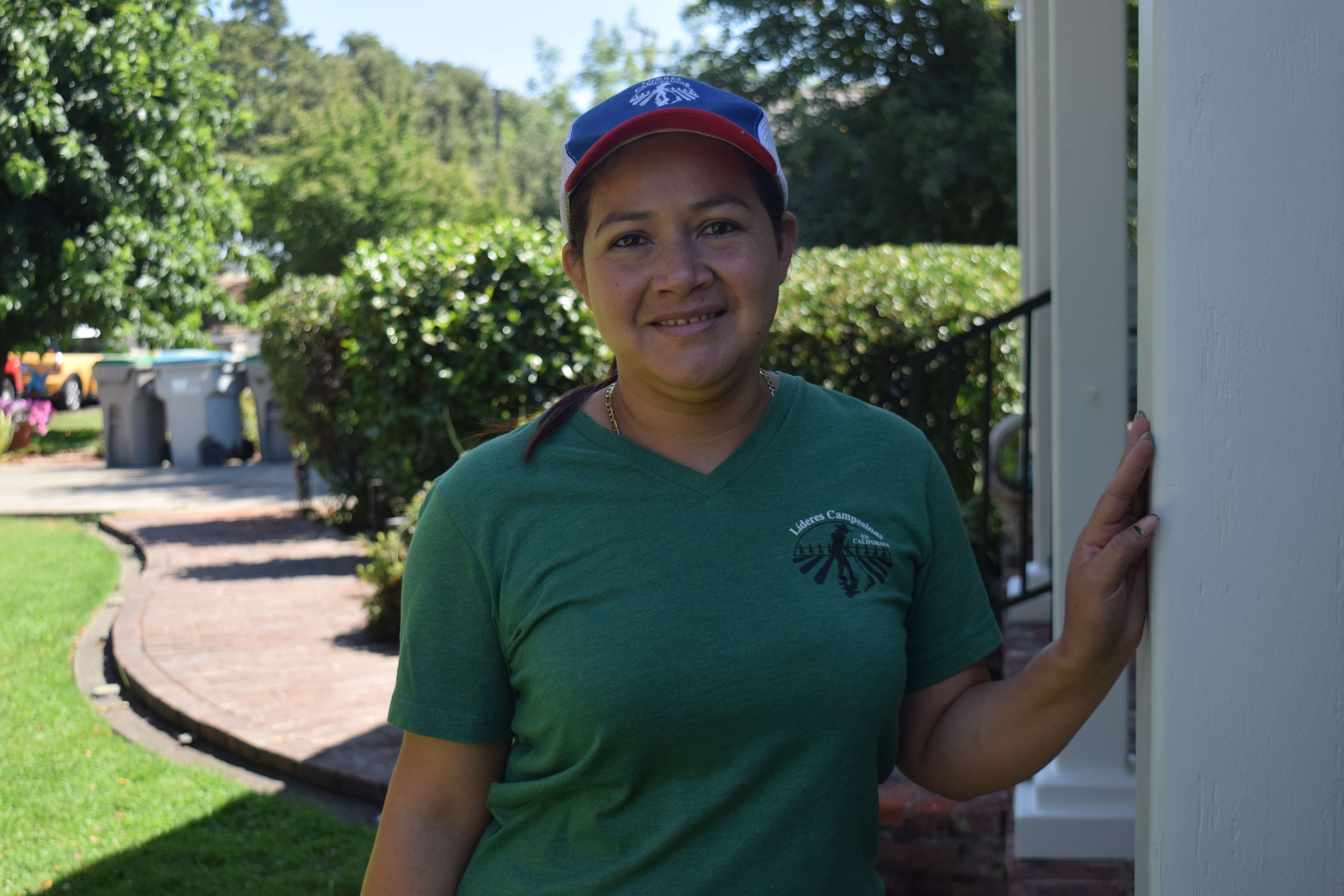
Lizbeth Mastache, who met privately with Becerra beforehand, said the days she spends in the fields picking grapes shrouded in wildfire smoke and extreme heat are not only becoming more frequent, but they are also making her sick.
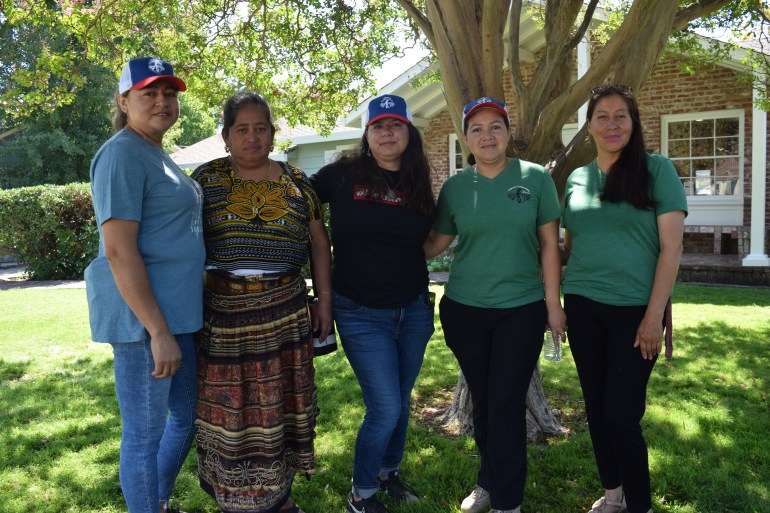
She has had headaches, fatigue, and nausea from the heat, and has gone to the emergency room after smoky skies triggered her asthma. She and other farmworkers told Becerra they need guaranteed sick leave — to care for themselves when the smoke and heat sickens them — and affordable health insurance.
“I had to work picking grapes during the wildfires and they didn’t give us masks,” said Mastache, a farmworker for the past 14 years.
She said some farms haven’t allowed outreach workers onto their property to educate workers about how to prevent heat illness.
That’s a problem when many seasonal workers, who move for work among different states, don’t know that California requires employers to provide water, breaks, and training.
About three years ago, researchers at the University of California-Merced’s Community and Labor Center found that 15% of California farmworkers did not receive minimum rest breaks, and over 40% said their employer never provided a heat illness prevention plan. More than a third of farmworkers said they would not file a report against their employer, most of them for fear of retaliation.
The California Farm Bureau, which represents about 29,000 farmers, disputes the center’s findings, saying there have been few cases of heat illness among its members’ workers. Bryan Little, director of employment policy at the bureau, said his organization has trained hundreds of farmers and ranchers on how to protect workers from heat illness, such as by providing water and portable shaded spaces in the field for employees to cool off.
“They’re doing things every day to try to make sure that we can avoid exposing human beings to these risks, to the greatest extent that we can,” Little said.
While farmworker advocates praise Becerra for drawing attention to the harmful and sometimes fatal impacts of heat and wildfire smoke, they worry federal dollars won’t reach the most vulnerable. For example, there’s no guarantee much of that $50 million earmarked for health care providers will go to health care centers that serve farmworkers, said Amy Liebman, a chief program officer at the Migrant Clinicians Network, who has worked in migrant safety and health for over two decades.
“We need to make sure that our health centers are prepared and our clinicians are prepared,” Liebman said. “So that means that there needs to be a shift in terms of not just this emphasis, but some of the funding for it.”
As Becerra left his podium, covered with the sign “Protecting Communities From Extreme Heat,” he disappeared into the library and minutes later departed for Stockton to champion the next issue — lower prescription drug prices — with Democratic Rep. Josh Harder, who represents a competitive Central Valley congressional district.
Healthbeat is a nonprofit newsroom covering public health published by Civic News Company and KFF Health News. Sign up for its newsletters here.
This article was produced by KFF Health News, which publishes California Healthline, an editorially independent service of the California Health Care Foundation.
Leave a Reply