
Does Your Kitchen Sink Have Bacteria That Could Make You Sick?
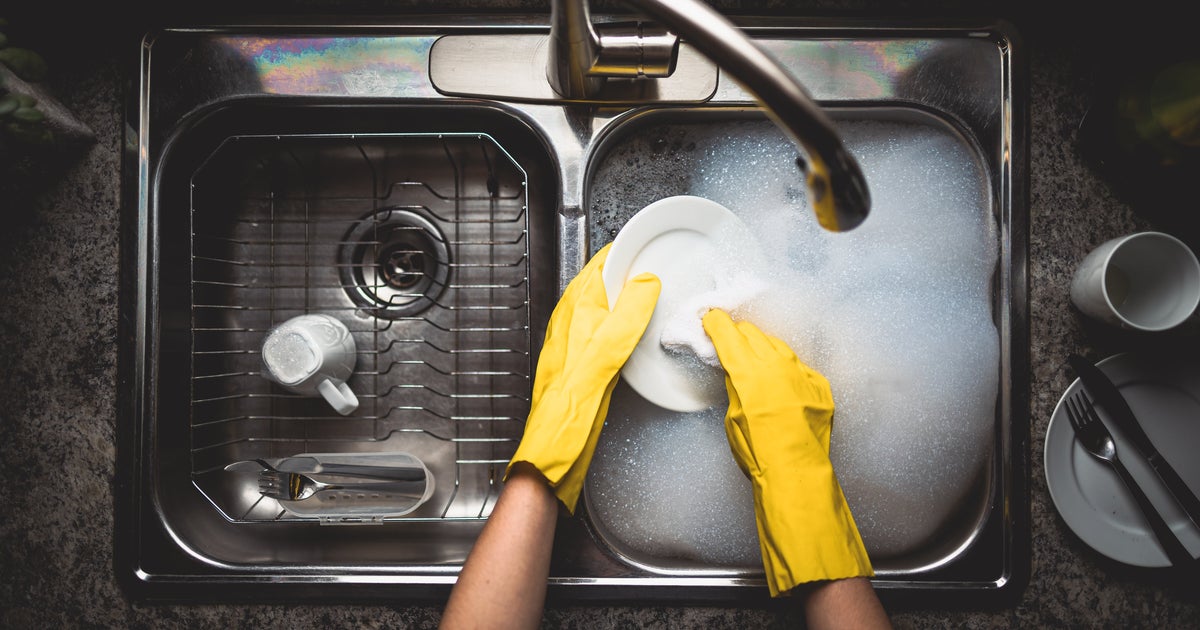
Think of all the things that happen in your kitchen sink. It’s where you wash your hands, scrub dishes, rinse fruits and vegetables, and drain packages of raw meat. You might also use it to clean paintbrushes and lots of other things or give your puppy a bath.
“Any germs on these items will wash off, and most will go down the drain — but some can get caught in the crevices” or the garbage disposal, if you have one, explained Lester Schonberger, associate extension specialist at the Virginia Tech Department of Food Science and Technology.
Once they’re there, germs can survive and thrive, as bacteria often love warm, moist environments like your kitchen sink. Depending on how you use it, Schonberger said, you could find “any number of microorganisms” in the sink, and they have the potential to make you sick.
Because of this, experts say, the kitchen sink is among the germiest spots in your kitchen. A 2023 U.S. Department of Agriculture study found that 34% of kitchen sinks were contaminated with bacteria after participants prepared breakfast with raw sausage, eggs and cantaloupe. More than a quarter of the cut-up cantaloupe was contaminated, which the USDA said likely happened when bacteria from the sink was transferred to the melon when it was washed.
So should you worry about the germs in your kitchen sink? Safety experts explain why it can harbor microorganisms and how this might affect your health.
How germy is your kitchen sink?
While it depends on exactly what you’re doing in your kitchen sink, it could be home to salmonella, E. coli and listeria — especially in the drain, which people typically don’t clean and sanitize, said Kevin Roberts, director of the hospitality management program at Kansas State University.
“Pretty much any foodborne bacteria that you could think of could be harbored in that sink,” he said.
Research supports the germy nature of kitchen sinks, Schonberger said.
A small 2022 study of 10 households published in Frontiers in Microbiology found that most were contaminated with multiple pathogens. In another study from 2017, out of 100 homes, fecal coliforms were found in 44%, mostly in samples from kitchen sinks, and 15% tested positive for E. coli.
Bacteria tend to lurk in kitchen sinks because they’re the “perfect environment” for these germs to grow, said Mitzi Baum, former CEO of Stop Foodborne Illness. There’s moisture, bits of food, warmth and air, and if the sink isn’t cleaned regularly, things have time to thrive.
Objects typically kept in the sink, like sponges, can be another source of contamination, Roberts said. A 2011 study by the public health and safety organization NSF asked 22 families to swab household items and found that 75% of dish sponges and rags contained E. coli and salmonella, and 45% of kitchen sinks had these bacteria.
Can the germs lurking in the sink make you sick?
Cross-contamination is the main issue with the germs in your kitchen sink, Schonberger said. “If your sink or drain is contaminated, then we’d need to be mindful about the ways in which those bacteria may get out of the sink and into your food.”
Laurens Kaldeway via Getty Images
For instance, if you place a bunch of grapes in your sink to wash them or fill the sink with water to submerge leafy greens, he said, you could “dislodge some of the bacteria onto your food” or splash water onto the countertops, contaminating that surface. E. coli, salmonella and listeria can all make people sick, Baum said.
“If given the opportunity to grow in your sink and food that is not being cooked makes contact with the sink, there is an opportunity for you to get sick,” she said. “The food could pick up the bacteria — there’s no such thing as the five-second rule. If the food is in the right conditions for too long, you could get sick.”
Signs of a foodborne illness from these bacteria can include nausea, vomiting, diarrhea, fever, headache and muscle cramps or weakness, according to the U.S. Department of Agriculture. It can be severe — an estimated 48 million Americans get foodborne illness each year, and 3,000 die from it.
People most at risk for foodborne illness (and getting severely ill) include people 65 and older, children under 5, pregnant women and individuals with weakened immune systems, according to the Centers for Disease Control and Prevention.
However, Schonberger said, “Most average adults who contract foodborne illness will experience some symptoms but should fully recover.”
How to properly clean (and disinfect) your kitchen sink.
Simply rinsing your sink isn’t enough to kill germs, Schonberger said. The water from your tap likely won’t dislodge bacteria hiding out in the sink’s crevices and doesn’t get hot enough to kill germs.
To get rid of germs and minimize cross-contamination with food, you need to clean and disinfect your sink regularly, Roberts said. “You can’t sanitize something that’s not clean.”
Use warm, soapy water to clean the sink, he said. The goal is to remove any dirt, debris and bits of food; use a toothbrush or toothpick to dislodge things stuck in the crevices, Schonberger said. Then, rinse out the soap and dry it with paper towels.
Once dry, use a sanitizer to kill bacteria or a disinfectant, which also will kill viruses, and let the sink air dry, Schonberger said. Products with bleach or alcohol, including wipes, can disinfect and sanitize — just follow the instructions on the item’s label. This guide will help you know what to look for.
You can make your own sanitizer by mixing 1/2 teaspoon of 4.5% sodium hypochlorite bleach for every quart of water (or 32 fluid ounces) or disinfectant by mixing 1/2 cup of the bleach for every gallon of water, according to the Virginia Cooperative Extension.
Roberts suggests cleaning and sanitizing your kitchen sink before and after preparing meals, especially when raw meat is involved, or at least once a week. This will help you avoid cross-contamination and potentially getting sick.
Remember, too, that you can’t see bacteria on your kitchen sink, he emphasized. “Just because it looks clean doesn’t mean it’s clean, doesn’t mean it’s sanitized.”
Leave a Reply