
Between fiscal deficit constraints and a growth push, Finance Minister strikes the golden mean | Union Budget 2025
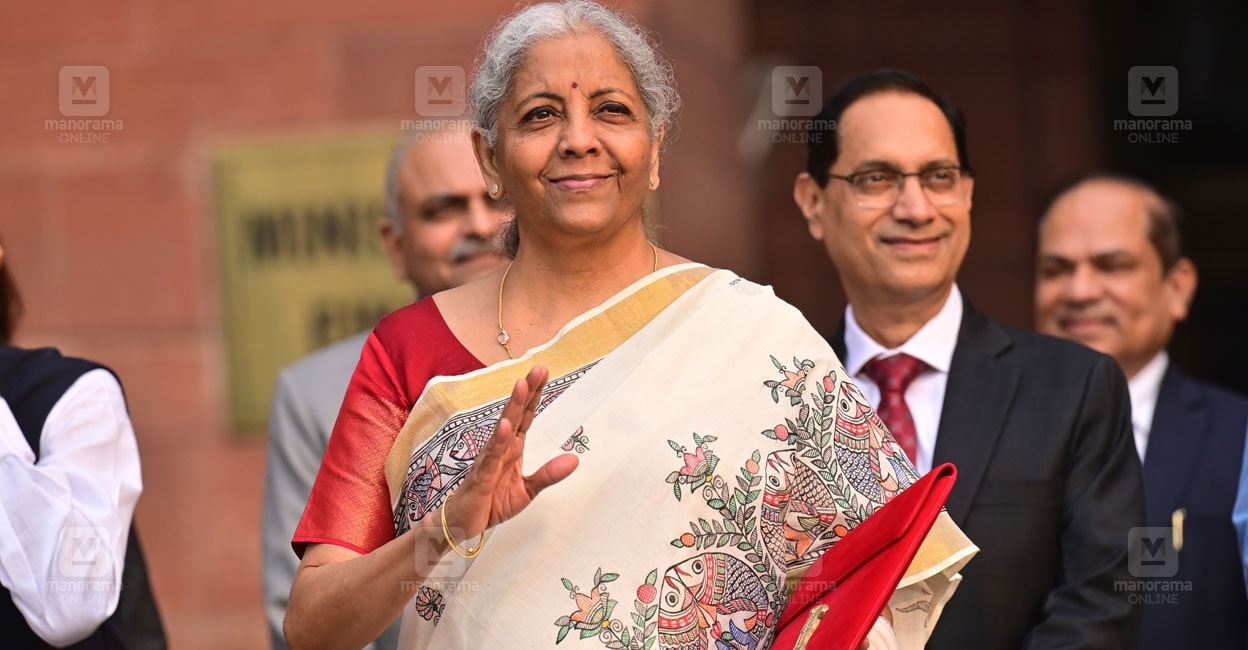
If budget-making is the art of the possible, that artistry was clearly on display as Finance Minister Nirmala Sitharaman presented the 2025-26 budget on Saturday in one of the shortest speeches in recent years.
In an economy showing signs of slowing down, the obvious fiscal response would be either increased government spending or tax cuts. The FM appears to have struck a careful balance, opting for both.
Government expenditure is set to rise from around Rs 47 lakh crore (FY 2024-25) to Rs 50 lakh crore, reflecting the government’s commitment to spurring growth.
At the same time, tax relief for the ‘middle class’, thanks to an unprecedented tax rebate being extended for income up to Rs 12 lakhs, is estimated at Rs 1 lakh crore. This giveaway aims to provide immediate financial relief to households amid a challenging economic environment.
Typically, such ‘budget math’ would have resulted in a higher fiscal deficit. However, the government has successfully maintained its deficit reduction trajectory, with the projected fiscal deficit set at 4.4%. This marks a significant achievement, as the deficit stood at 9.2% in 2020-21.
Over the past four years, the government has managed to halve this deficit, demonstrating its capacity to balance fiscal stimulus with prudent financial management. This achievement highlights one of the most noteworthy aspects of the government’s resource strategy — its remarkable ability to meet revenue targets through taxes.
Originally, tax revenues for the current fiscal year were estimated at Rs 25.83 lakh crore, but the revised estimate stands at Rs 25.56 lakh crore. While the revised number represents a minor downward adjustment, it underscores overall the effectiveness of the government’s tax machinery. The consistent ability to either meet or exceed tax targets is a testament to improved compliance measures and a more efficient tax administration system.
Except for the Covid-affected year of 2020-21, the government has either over-achieved its tax mobilization targets or stayed in line with estimates. This performance continues in the current budget, which projects income tax revenues of Rs 14.38 lakh crore, up from Rs 12.57 lakh crore in FY 2024-25, despite the major tax relief. This optimistic projection reflects the government’s confidence in maintaining robust revenue generation despite economic challenges.
At the same time, the government has continued its welfare thrust, particularly in the sectors of agriculture, MSMEs, rural livelihoods, and support for small businesses.
One of the most significant measures in the 2025-26 budget is the enhancement of the interest subsidy limit for Kisan Credit Card loans, which will rise from Rs 3 lakh to Rs 5 lakh. This change has the potential to benefit approximately 7.7 crore farmer-borrowers, providing them with easier access to affordable credit.
Similarly, the government has taken steps to boost the Small, Micro, and Medium Enterprises (SME) sector, which has long been a crucial engine of employment and economic growth. The permissible investment limit for MSMEs has been increased by 2.5 times, allowing all manufacturing units with investments up to Rs 125 crore (up from Rs 50 crore) to be classified under the MSME definition.
This move is expected to unlock significant benefits for a large number of small businesses, which will now find it easier to access finance and government support. In addition, the borrowings of these businesses will be classified as “priority sector” loans, a category that ensures preferential treatment in bank lending. Under RBI guidelines, banks are required to ensure that 40% of their total loans are directed towards the priority sector, or face penalties.
The Finance Minister also highlighted the critical role of MSMEs in India’s economic future. “Currently, over 1 crore registered MSMEs, employing 7.5 crore people and contributing 36% of our manufacturing, have come together to position India as a global manufacturing hub.
With their quality products, these MSMEs are responsible for 45% of our exports. These budget measures will give them the confidence to grow and generate employment for our youth,” she remarked. Additionally, the credit guarantee cover for loans to MSMEs has been doubled from Rs 5 crore to Rs 10 crore, while the guarantee limit for start-ups has been raised from Rs 10 crore to Rs 20 crore.
Beyond MSMEs, the government has also focused on ensuring a ‘light-touch regulatory framework’ for businesses. A key proposal is the establishment of a committee for regulatory reforms, designed to streamline the business environment and reduce unnecessary burdens on companies.
Furthermore, the decision to allow 100% foreign direct investment (FDI) in the insurance sector is seen as a major move to attract global capital and expertise, enhancing the sector’s competitiveness and efficiency.
The budget also underscores the government’s ongoing commitment to infrastructure investment. The allocation for infrastructure development is set at Rs 11 lakh crore for 2025-26, signaling that the government will continue its ambitious push for infrastructure growth in critical sectors such as roads, highways, railways, and urban infrastructure. These investments are seen as crucial for improving connectivity and driving long-term economic growth.
The key question now is whether these measures will result in growth picking up in 2025-26. From the government’s perspective, the message is clear — it will create the right conditions and enablers for growth. However, a crucial issue remains: Will the private corporate sector step up to invest in new capacity to help achieve the targeted growth rates of 7-8%?
The Economic Survey, authored by the government’s Chief Economic Advisor Anantha Nageswaran, projects growth in 2025-26 to be a maximum of 6.8%. However, it also emphasizes that India’s growth must reach at least 8% annually to achieve developed status. The Economic Survey stresses that India needs sustained growth of around 8% for a decade or more to realize its aspirations of becoming a “Viksit Bharat” or developed nation.
The ball is now firmly in the court of the private corporate sector and consumers, particularly in the urban areas as rural demand has been robust, thanks to the good growth recorded by Agriculture and allied activities. Will the budget measures deliver higher growth ? At least, nobody can fault the Government for lack of trying.
(S Adikesavan is a commentator on economy and banking. Opinions expressed are personal)
Leave a Reply