
A More Robust Approach for Piano Transcription
Piano Transcription
A more robust approach for piano transcription is essential in advancing the accuracy and reliability of converting piano audio recordings into symbolic representations such as MIDI data or sheet music. While significant progress has been made in automatic piano transcription algorithms, challenges remain in accurately capturing the nuances of piano performances, including dynamics, articulation, and pedal usage. A robust approach seeks to address these challenges by leveraging advanced signal processing techniques, machine learning algorithms, and domain-specific knowledge to improve transcription accuracy and resilience to variations in audio recordings.
One key aspect of a more robust approach for piano transcription is the integration of advanced signal processing techniques to extract relevant features from the audio signal. Techniques such as spectral analysis, pitch detection, and onset detection are used to identify the fundamental frequencies, timing, and intensity of individual notes played on the piano. Additionally, methods for analyzing timbral characteristics, such as harmonic content and spectral envelope, can provide valuable information for distinguishing between different types of piano sounds and capturing the expressive nuances of the performance.
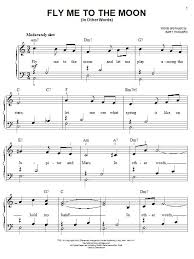
Incorporating machine learning algorithms, such as deep neural networks, can further enhance the robustness of piano transcription systems by enabling them to learn complex patterns and relationships in the audio data. Supervised learning approaches, where the transcription system is trained on large datasets of annotated piano recordings, can help improve transcription accuracy by learning from examples of correct transcriptions. Meanwhile, unsupervised learning techniques, such as clustering or autoencoders, can help capture the underlying structure and variability in the audio data, enabling the system to generalize better to unseen recordings.
https://tartalover.net/nicole-pesce
A More Robust Approach for Piano Transcription
Domain-specific knowledge about piano performance techniques, musical structure, and notation conventions is also crucial for developing a robust transcription approach. By incorporating knowledge about common piano playing techniques, such as legato, staccato, and pedal usage, the transcription system can better interpret the expressive intentions of the performer and produce more accurate transcriptions. Likewise, knowledge about musical structure and notation conventions can help guide the transcription process and ensure that the output adheres to standard musical conventions.
https://m.youtube.com/@tartalover2682/videos
Furthermore, a more robust approach for piano transcription should be able to adapt to variations in audio recordings, such as differences in recording quality, piano timbre, and performance style. Techniques for audio normalization, noise reduction, and timbre modeling can help mitigate the effects of recording artifacts and environmental noise, ensuring that the transcription system performs reliably across different recording conditions. Additionally, methods for modeling performance variations, such as tempo fluctuations and rhythmic deviations, can help capture the expressive nuances of the performance while maintaining overall transcription accuracy.
Evaluation and benchmarking are essential aspects of developing a more robust approach for piano transcription, allowing researchers to assess the performance of transcription systems under various conditions and compare different algorithms and techniques. Objective metrics such as pitch accuracy, onset detection, and timing precision can provide quantitative measures of transcription accuracy, while subjective evaluations involving expert musicians or listeners can assess the perceptual quality and musical fidelity of the transcriptions.
In conclusion, developing a more robust approach for piano transcription requires a multidisciplinary approach that integrates advanced signal processing techniques, machine learning algorithms, and domain-specific knowledge about piano performance and music notation. By addressing the challenges of transcription accuracy, variability, and resilience to recording conditions, a robust transcription approach has the potential to advance the state-of-the-art in automatic piano transcription and enable new applications in music analysis, synthesis, and performance.
Leave a Reply