
Self-Managed Abortion Increased After Roe Was Overturned
Self-managed abortions using abortion pills increased in the six months following the Supreme Court decision that repealed federal abortion protections, new research shows.
The study, published in the Journal of the American Medical Association on Monday, is a groundbreaking look at how self-managed abortion using abortion pills is becoming more and more common since the overturning of Roe v. Wade. It’s one of the few studies to analyze the prevalence of abortion outside of formal health care settings in the U.S.
Researchers found that 27,838 “provisions” of pills for abortions were sent to abortion-seeking people via community groups, international telemedicine organizations and online sources, in the six months after the Dobbs v. Jackson Women’s Health decision that repealed Roe v. Wade.
Each of these “provisions” is defined as the “mailing or delivering of a pill pack for a self-managed abortion,” the lead author of the study, University of Texas at Austin associate professor Abigail Aiken, told HuffPost. The number of pill packs distributed represents a 322% average monthly increase from pre-Dobbs levels of medication abortion used for self-managing care, according to the analysis.
“We see over and over that when abortion bans are present, it doesn’t necessarily change the need for abortion,” Aiken told HuffPost. “People quite often will look for it outside the formal health care setting if access within the formal health care setting is taken away, and I think that’s what we’re seeing play out here now.”
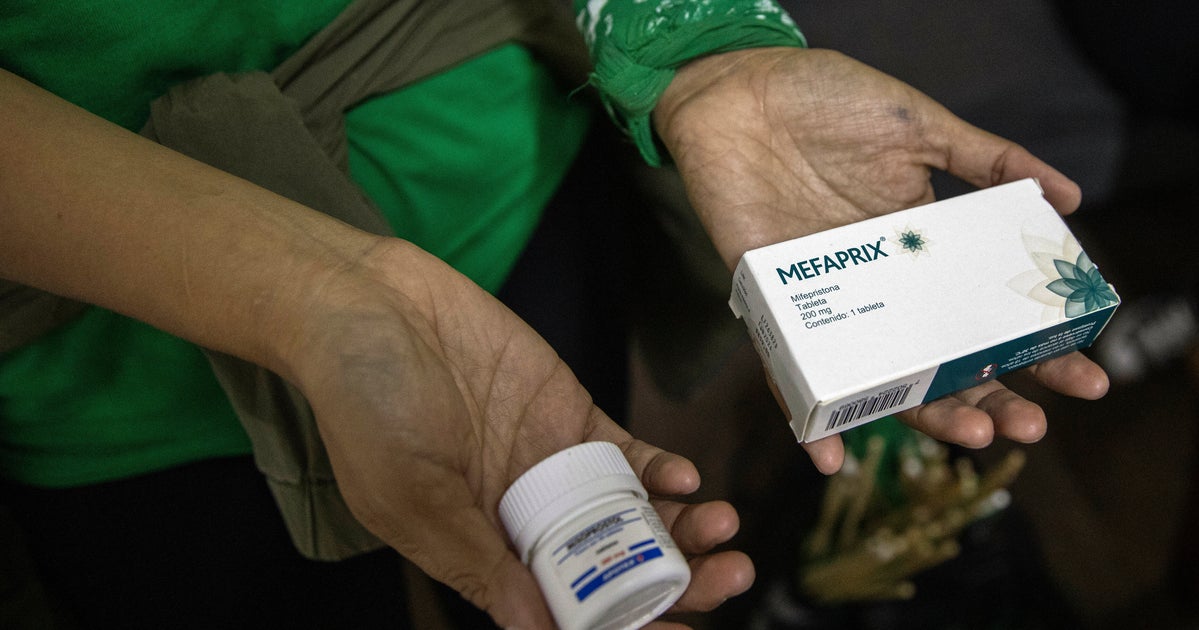
Self-managed abortion refers to using drugs — either mifepristone and misoprostol or just misoprostol — to induce abortion without the oversight of an abortion clinic or physician. The study defined “self-managed care” as abortion pills used without the involvement of a U.S.-based provider or clinic. (Its tally doesn’t account for medication abortion drugs distributed through U.S.-based telehealth.)
Abortion done this way is safe and effective for anyone less than 13 weeks pregnant, according to the World Health Organization.
The Supreme Court on Tuesday will hear oral arguments in FDA v. Alliance for Hippocratic Medicine, which may roll back access to mifepristone. The outcome of the case could have a devastating effect on medication abortion access within formal health care settings like clinics — meaning the research out Monday could be a sneak peek into a future where self-managed abortion is more common because physician-managed abortion care is further restricted.
“From a public health standpoint … if this is going to be the way that many people access their abortion care now in the United States, knowing that they have a safe and effective way of doing that means the picture looks pretty different to the pre-Roe era, when people didn’t have access [and] had to resort to things that were unsafe,” Aiken said.
In addition to Aiken, the research was conducted by Elisa Wells, co-founder of Plan C, an advocacy organization that provides people with information on how to obtain abortion pills; Rebecca Gomperts, founder of Aid Access, a nonprofit Austrian organization that provides medication abortion in the U.S. by mail; and James Scott, a statistics and data sciences professor at the University of Texas at Austin.
The study estimates that the provision of nearly 28,000 pill packs led to 26,055 self-managed abortions in the six months after Dobbs. Around 85% of the abortion pills were distributed by community networks that sourced the medication from outside of the country and telemedicine organizations with physicians who aren’t based in the U.S. The remainder came from international online vendors who ship abortion pills from overseas.
Initial research after the Dobbs decision indicated that there were around 32,000 fewer abortions in the six months after the ruling due to the abortion bans implemented in several states immediately after. But this study suggests that self-managed abortions, done without a U.S.-based physician’s oversight, might have made up some of the difference.
“From the result we have here, it looks like there wasn’t so much a complete drop in people accessing abortion, but rather a shift of where they were accessing it — from within [the formal health care setting] to outside the formal health care setting,” Aiken told HuffPost.
“If we want to see how people respond to abortion bans, having self-managed abortions as part of that picture is imperative,” she said.
Self-managed abortion was relatively common even before the Dobbs decision, most often in states where in-clinic access was restricted. Since the COVID-19 pandemic, access to abortion pills has expanded rapidly because of the rise of online pharmacies in the U.S. and international websites that ship abortion pills directly to patients’ homes. These access points became even more critical when Roe fell in the summer of 2022 and over a dozen states implemented near-total abortion bans.
Self-managed abortion is only explicitly illegal in Nevada, but there are still risks. Dozens of women have been arrested, prosecuted and jailed for managing their own care — in some cases, because a rogue prosecutor in a deeply conservative area misapplies laws to further an anti-abortion agenda. There are resources available for people who choose to self-manage, including the Miscarriage and Abortion Hotline for medical support or the Repro Legal Helpline for legal advice.
“The results of this study confirm what many of us have been saying for a long time: people always have and will continue to safely self-manage abortions,” Nancy Cárdenas Peña, the campaign director of Abortion On Our Own Terms campaign, told HuffPost in a statement.
“When I self-managed my abortion, I was able to do so knowing I had a support system that would give me the love and care I needed. I was able to decide how, when and where to have my abortion, which ultimately made it a powerful and liberating experience for me,” she continued. “I know that for some people, barriers to access will make getting the care they need near impossible.”
Leave a Reply