
)
Climate change expanding dengue’s reach? Why India’s fight needs more than fogging – Firstpost
Dengue fever is rapidly emerging as a major health concern across India, particularly during the monsoon and post-monsoon months from July to mid-November. Traditionally concentrated in certain regions, the disease is now spreading to new areas such as Nagaland and parts of Himachal Pradesh, with experts attributing this expansion largely to climate change.
Data from the National Centre for Vector-Borne Disease Control (NCVBDC) under the Ministry of Health and Family Welfare reveals a sharp increase in dengue cases, from 28,066 in 2010 to over 2.89 lakh in 2023. Alarmingly, more than 16,000 cases have already been reported by March 2025, signaling an early and concerning rise this year.
According to a study published in The Lancet, climate-sensitive diseases like dengue are likely to rise significantly, especially in South Asia, if countries do not act urgently. Northern Indian states like Jammu and Kashmir and Himachal Pradesh have started seeing regular outbreaks, a sign that the traditional “dengue belt” is expanding.
On a global scale, the World Health Organization (WHO) estimates that due to global warming, up to 4.7 billion people could be at risk of dengue infection by the end of this century, highlighting the pressing need for comprehensive preventive measures worldwide.
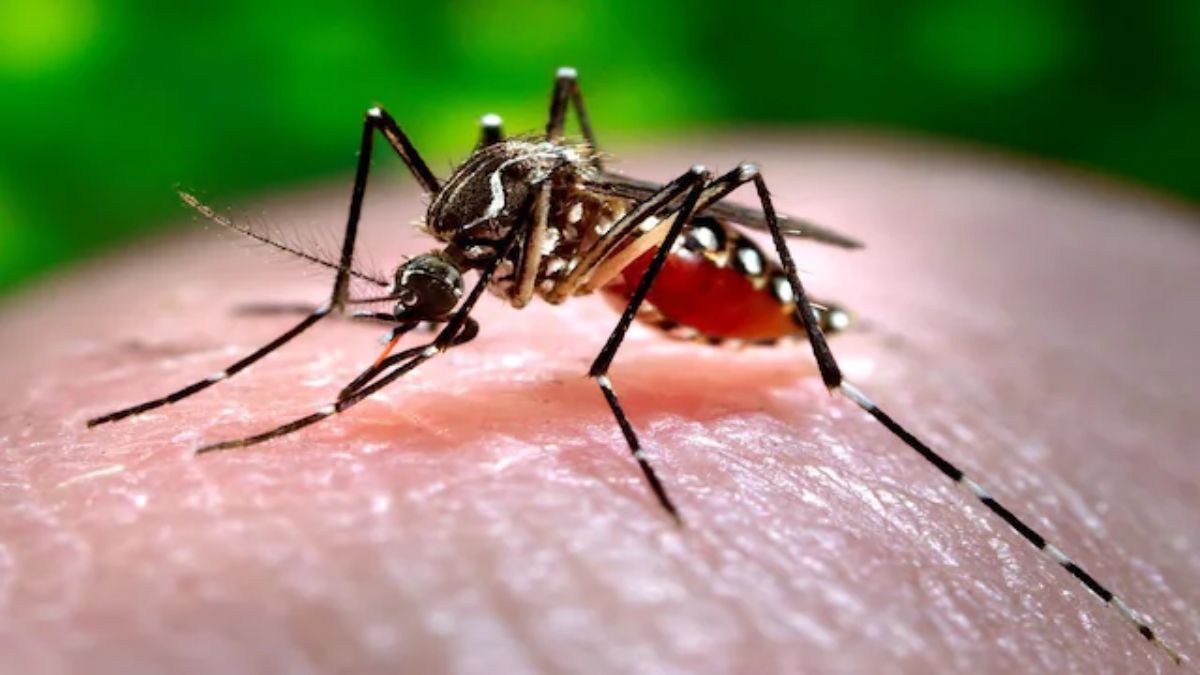
Dengue is caused by a virus spread by Aedes mosquitoes, which thrive in warm, humid climates. As the climate changes, more parts of India are becoming suitable for mosquito breeding. Higher temperatures speed up mosquito breeding cycles and help the dengue virus multiply faster inside mosquitoes’ bodies. Rainfall, flooding and even water storage during droughts create pools of stagnant water that serve as breeding grounds for mosquitoes, said Dr. Vikram Jeet Singh, Senior Consultant in Internal Medicine at Aakash Healthcare.
Experts say India must take urgent steps to manage dengue in both the short and long term. In the short term, a multi-pronged strategy is essential. One of the most effective measures is the use of mosquito nets, window screens, and covers for water storage containers. When used consistently, these have been shown to significantly reduce mosquito bites and dengue transmission, said Dr. Sunil Rana, Associate Director and Head of Unit III, Internal Medicine, Asian Hospital.
Also, biocontrol methods like introducing mosquito-eating fish into ponds and tanks have been successfully used in states like Andhra Pradesh to reduce mosquito populations without relying on chemical insecticides, Dr. Rana added.
Dr Manisha Arora, Director – Internal Medicine at the CK Birla Hospital (Delhi) said “Obviously, climate change worsens the problem by creating ideal breeding conditions through altered temperatures and irregular rainfall. Fogging alone won’t solve dengue; we need a comprehensive strategy that addresses poor sanitation and infrastructure. Strengthening healthcare systems, improving surveillance and involving the community through public education are crucial. A holistic approach including eliminating stagnant water, using mosquito nets and larval control is essential to prevent and control the menace.
Stronger partnerships between the government and the private sector can amplify the impact of control measures. Businesses can support community clean-up campaigns, fund public awareness drives, or help distribute low-cost mosquito control products, said Dr. Vineet Rao, Consultant – General Medicine, Jupiter Hospital, Baner (Pune).
In remote and underserved areas with limited health infrastructure, mobile health clinics and ASHA workers can play a critical role in delivering services such as dengue testing and educating communities on prevention methods, he added. At a broader policy level, disaster response plans especially in flood-prone states like Assam and Bihar—should integrate mosquito control as a key priority.
According to Dr Aakaar Kapoor, CEO and Lead Medical Advisor at City X-Ray and Scan Clinic, India should adopt Integrated Vector Management (IVM)—a coordinated approach that involves multiple sectors such as health, agriculture, urban planning, and the environment. While India’s National Vector-Borne Disease Control Programme (NVBDCP) includes elements of IVM, more coordination and on-ground training are needed to make it fully effective.
However, Dr. Praveen Gupta, Principal Director & Chief of Neurology, Fortis Hospital, emphasized that dengue’s nationwide spread, amplified by climate change, brings not just fever but also serious neurological risks such as encephalitis, seizures, and Guillain-Barré syndrome. As cases surge year-round, early diagnosis and awareness are crucial. Beyond vector control and vaccines, safeguarding brain health demands urgent, coordinated, and informed public health action.
Public health efforts must be supported by individuals, local communities, and government agencies alike. As India adapts to a changing climate, fighting dengue must become a top priority—not just for health, but for national development, said Dr. Vikram.
Leave a Reply