
Are there different types of custom pcb?
different types of custom pcb
Custom printed circuit boards (PCBs) come in various types, each designed to meet specific application requirements and operating conditions. The diversity in custom PCBs allows for tailored solutions across a wide range of industries, from consumer electronics to aerospace. Understanding the different types of custom PCBs helps in selecting the right board for a particular project, ensuring optimal performance and reliability.
One of the most common types of custom pcb is the single-sided PCB. These boards have a single layer of conductive material, usually copper, on one side of the substrate. They are simple and cost-effective, making them suitable for low-complexity applications where space and electrical demands are minimal. Single-sided PCBs are often used in consumer electronics, such as calculators, power supplies, and simple household appliances.
Double-sided PCBs feature conductive layers on both sides of the substrate, allowing for more complex circuit designs compared to single-sided boards. Components can be mounted on both sides, and vias—holes drilled through the board—allow for electrical connections between the two layers. This type of PCB is ideal for more complex applications that require a higher density of components, such as industrial controls, automotive dashboards, and power conversion systems.
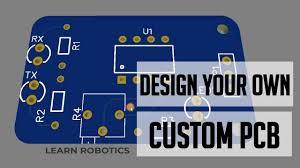
Are there different types of custom pcb?
Multilayer PCBs consist of multiple layers of conductive material separated by insulating layers. These boards can have three or more layers, with some designs featuring up to 50 or more layers for extremely complex applications. The additional layers provide greater design flexibility, higher circuit density, and improved performance characteristics, such as reduced electromagnetic interference (EMI) and enhanced signal integrity. Multilayer PCBs are commonly used in sophisticated electronics like smartphones, computers, and telecommunications equipment.
Rigid PCBs are constructed from solid, inflexible materials such as fiberglass, providing a sturdy and stable platform for electronic components. These boards are highly durable and can support heavy components without bending or warping. Rigid PCBs are widely used in applications where the board must maintain its shape and integrity, such as desktop computers, medical devices, and military equipment.
In contrast, flexible PCBs are made from flexible materials like polyimide, allowing the board to bend and fold. This flexibility makes them suitable for applications where space constraints and dynamic movement are factors, such as in wearable technology, foldable smartphones, and aerospace systems. Flexible PCBs can be single-sided, double-sided, or multilayered, offering versatility in design.
Rigid-flex PCBs combine the benefits of both rigid and flexible PCBs. These boards consist of multiple layers of rigid and flexible circuits laminated together into a single structure. Rigid-flex PCBs provide the reliability and strength of rigid boards while allowing for flexible connections between rigid sections. This hybrid design is advantageous in applications where space savings and complex geometries are required, such as in medical implants, automotive electronics, and advanced instrumentation.
High-frequency PCBs are specialized for applications that operate at high frequencies, typically above 1 GHz. These boards use materials with specific dielectric properties to ensure signal integrity and minimize signal loss. High-frequency PCBs are essential in radio frequency (RF) and microwave applications, including satellite communications, radar systems, and wireless networks.
Lastly, there are metal-core PCBs (MCPCBs), which incorporate a metal core—usually aluminum or copper—in the substrate. The metal core helps dissipate heat more effectively than standard PCBs, making them ideal for high-power applications where thermal management is crucial. MCPCBs are commonly used in LED lighting, power supplies, and motor controllers.
Leave a Reply